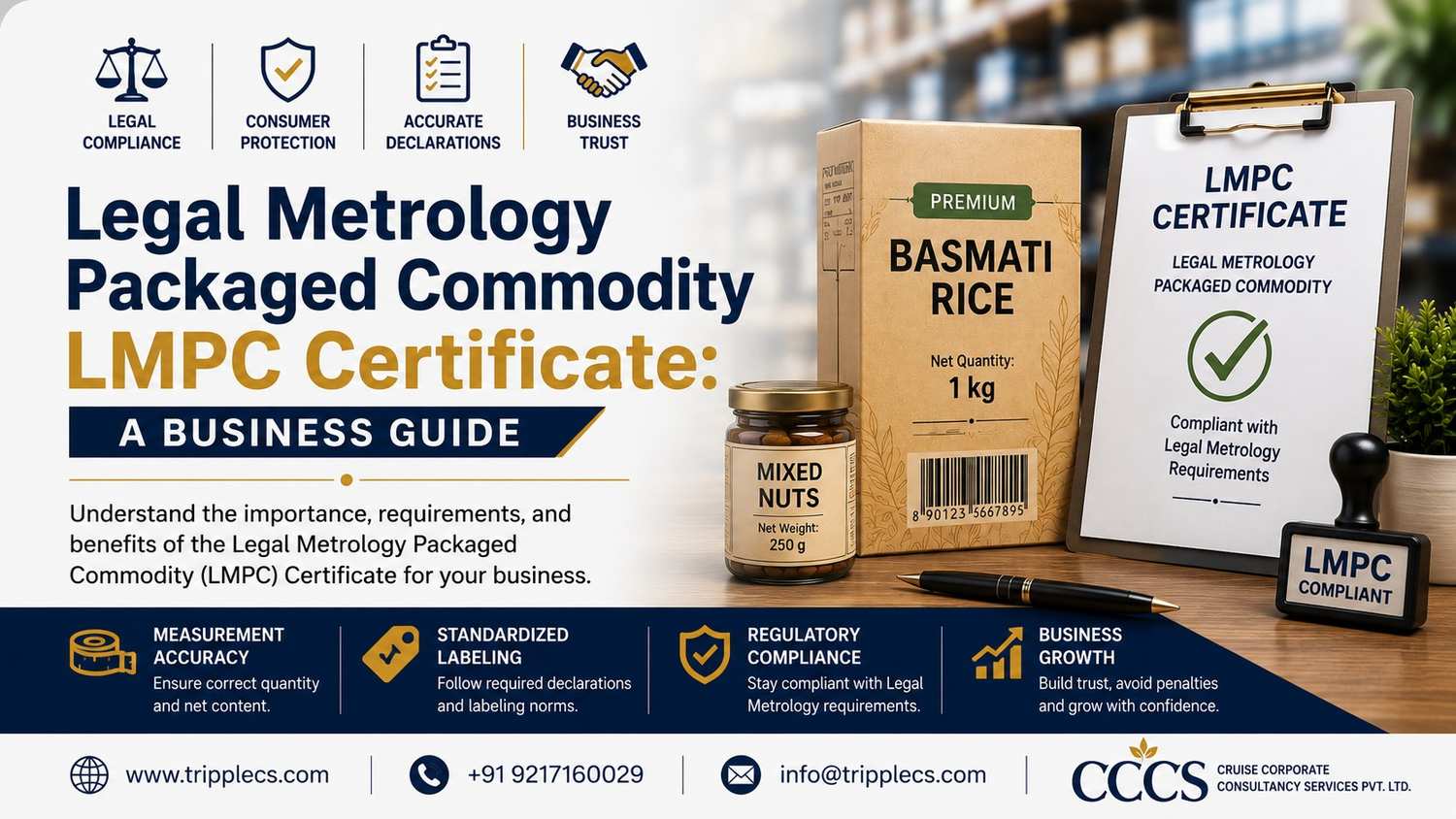

A packaged product begins communicating with a customer before the package is even opened.
The name printed on it, quantity mentioned, manufacturer or importer information, price and other declarations help buyers understand exactly what they are purchasing. For a business, these details may appear to be part of ordinary packaging design. From a regulatory perspective, however, they can carry much greater importance.
This is where the Legal Metrology Packaged Commodity LMPC Certificate becomes relevant for businesses dealing with applicable pre-packaged commodities in India.
The subject deserves attention not simply because it involves compliance, but because packaging sits directly between a business, its product and the customer.
A Package Is More Than a Container
Companies naturally spend time making packaging attractive.
Design teams consider colours, typography, product images, branding and shelf visibility. Marketing teams think about what will attract customers. Operations teams consider durability and transportation.
Compliance adds another perspective.
For applicable packaged commodities, certain declarations and regulatory requirements may need to be considered before products are offered in the Indian market.
This means packaging decisions should not always be left entirely to designers, manufacturers or marketing teams.
A package can be visually perfect and still deserve a regulatory review.
Why Legal Metrology Matters to Businesses Selling Packaged Goods
Legal Metrology is closely connected with measurements and declarations associated with goods sold in the market.
For businesses dealing with packaged commodities, the underlying purpose is practical: customers should receive relevant information about what they are buying.
From a business perspective, this creates responsibilities that should be considered alongside product sourcing, manufacturing and distribution.
The Legal Metrology Packaged Commodity LMPC Certificate is therefore better understood as part of a wider compliance framework rather than simply another certificate to obtain and forget.
The exact requirements applicable to a business can depend on its activities, products and circumstances, which is why individual assessment matters.
The Product May Be the Same, but the Business Situation May Not Be
Two companies can sell similar-looking products while operating under very different circumstances.
One may manufacture products in India.
Another may import finished packaged goods.
A third may market products manufactured by another company.
Their supply arrangements, packaging responsibilities and commercial roles may not be identical.
This is an important reason businesses should be cautious about copying compliance decisions made by competitors.
What worked for another company does not automatically establish what applies to yours.
A better starting point is understanding your own product, packaging and role in bringing that product to market.
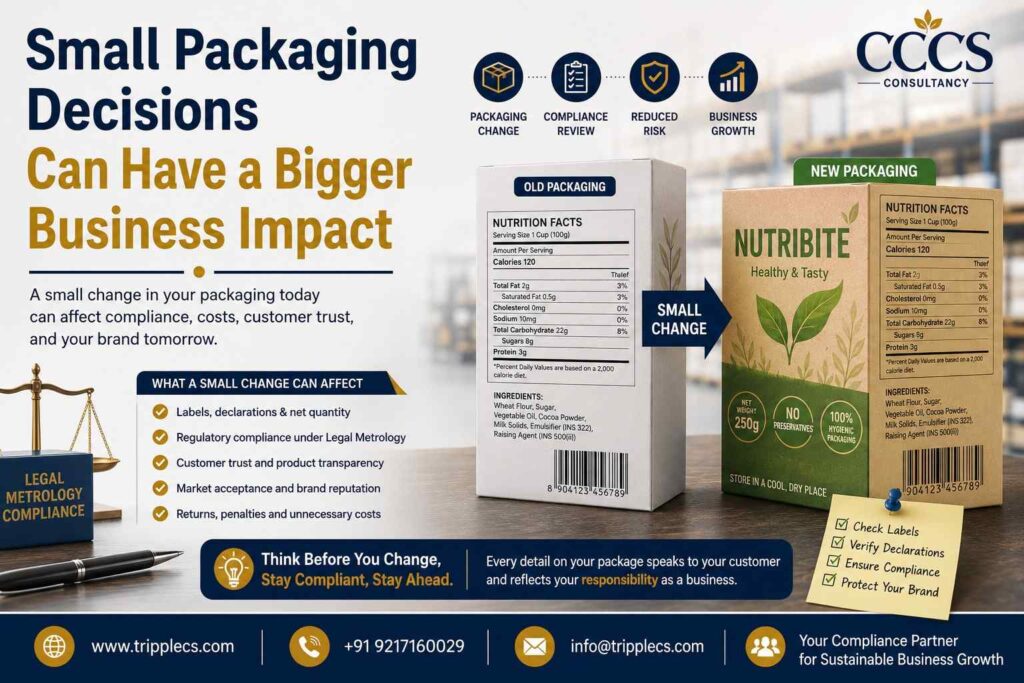
Small Packaging Decisions Can Have a Bigger Business Impact
Packaging changes happen frequently.
A company may introduce a new quantity, redesign a label, change an overseas supplier, launch a premium version or move into a different sales channel.
From a marketing perspective, these may seem like ordinary commercial decisions.
From a compliance perspective, they may deserve another look.
Businesses sometimes make the mistake of treating compliance as a one-time event. They obtain an approval or registration and assume that nothing needs attention afterward.
Growing companies benefit from a different mindset:
When the business changes, consider whether the compliance position needs to be reviewed as well.
That simple habit can prevent old assumptions from following a company into new products and markets.
Where Businesses Commonly Lose Clarity
The challenge is not always a lack of information.
Sometimes there is too much information.
A business owner searches online and finds different terminology, old discussions, advice written for another product category and experiences shared by businesses operating under different circumstances.
The result can be more confusion rather than less.
Questions then begin to appear:
Does this requirement apply to our product?
Does our role in the supply chain matter?
Are our existing package declarations appropriate?
Has something changed since our previous product launch?
These are business-specific questions. Generic information can provide background, but it may not provide a reliable answer for every commercial situation.
Compliance Should Join the Product Conversation Earlier
Consider how a company normally launches a packaged product.
Management approves the idea. The product is sourced or manufactured. Pricing is finalized. Packaging is designed. Inventory is arranged. Sales and marketing teams prepare the launch.
Compliance is sometimes discussed near the end.
That order can create unnecessary pressure.
A more mature business approach brings regulatory considerations into the conversation while important product and packaging decisions are still being made.
This does not mean allowing compliance to slow down innovation.
It means giving the business enough time to make informed decisions without having to redesign or reconsider something under last-minute pressure.
Imported Packaged Commodities Add Another Layer
Businesses sourcing packaged products internationally should pay particular attention to this subject.
An overseas supplier may have excellent manufacturing standards and extensive export experience, but packaging prepared for another country may not automatically address every requirement applicable in India.
The importer therefore needs to consider the Indian regulatory environment rather than relying solely on the supplier’s previous experience.
Businesses specifically dealing with imported packaged commodities can also refer to our guide on LMPC Certificate for Import for a more import-focused discussion.
When the concern relates specifically to goods approaching the customs stage, our article on LMPC Certificate in Customs provides additional context.
These topics are connected, but they address different points in a business’s compliance journey.
Good Compliance Is Often Invisible to the Customer
Customers rarely think about regulatory planning when they pick a product from a shelf or receive an online order.
They simply expect the information on the package to be clear and the business behind the product to operate responsibly.
That is precisely why good compliance can be easy to overlook.
When handled correctly, it becomes part of normal business operations rather than an emergency.
For companies building a long-term brand, this matters.
Regulatory readiness supports more than documentation. It contributes to disciplined operations, responsible market participation and greater confidence when expanding product lines.
When a Fresh Compliance Review Makes Business Sense
A company does not necessarily need to wait for a regulatory problem before seeking advice.
A review can make sense when the business is introducing a new packaged product, entering the Indian market, changing packaging, working with a new manufacturer, expanding its import activities or simply becoming uncertain about whether its existing approach remains appropriate.
The purpose of the review should be clarity.
Businesses should know what is relevant to them, what deserves attention and when professional action may be required.
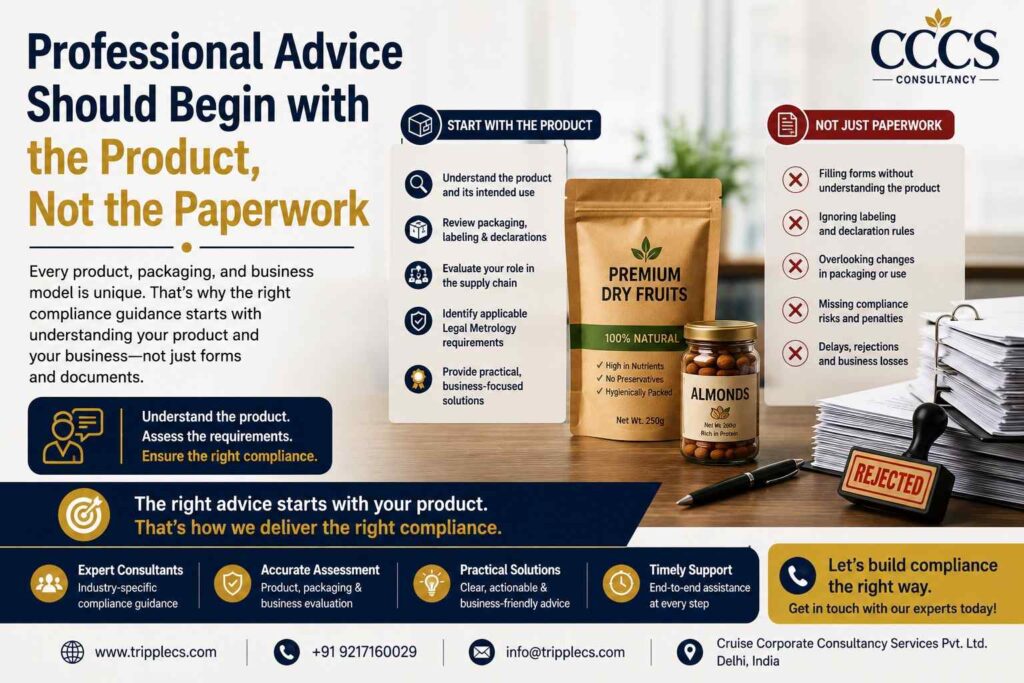
Professional Advice Should Begin with the Product, Not the Paperwork
At Cruise Corporate Consultancy Services Pvt. Ltd., we believe compliance guidance should begin by understanding the business situation.
The product matters.
The packaging matters.
The company’s role matters.
The way goods reach the market matters.
Only after understanding these factors can compliance requirements be considered in the right context.
This approach helps businesses avoid treating the Legal Metrology Packaged Commodity LMPC Certificate as an isolated administrative task.
Instead, it becomes part of responsible product and market planning.
Build Compliance Around the Business You Want to Become
A company launching its first packaged product may have very different priorities from a business managing hundreds of SKUs across multiple suppliers.
But both have something in common: today’s decisions create the foundation for tomorrow’s growth.
A business that develops good compliance habits early is better prepared when its product portfolio becomes larger and its operations become more complex.
That is why Legal Metrology compliance should not be viewed only through the question:
“What do we need right now?”
Businesses should also ask:
“Is our compliance approach capable of supporting where the company is going next?”
Need Clarity for Your Packaged Products?
If your business manufactures, imports or deals with packaged commodities and you need professional guidance regarding applicable Legal Metrology requirements, our consultants can help you understand the compliance considerations relevant to your operations.
Cruise Corporate Consultancy Services Pvt. Ltd.
🌐 Website: tripplecs.com
📞 Phone: +91 9217160029
Our approach focuses on understanding your business first and helping you make informed compliance decisions with greater confidence.
Because strong compliance should not begin when a problem appears.