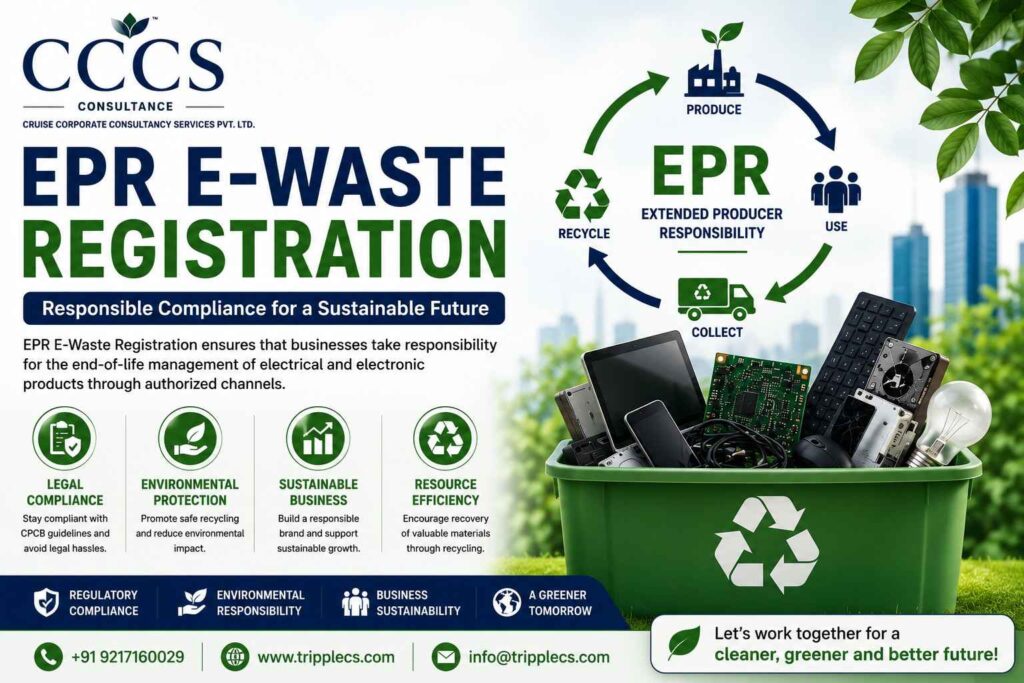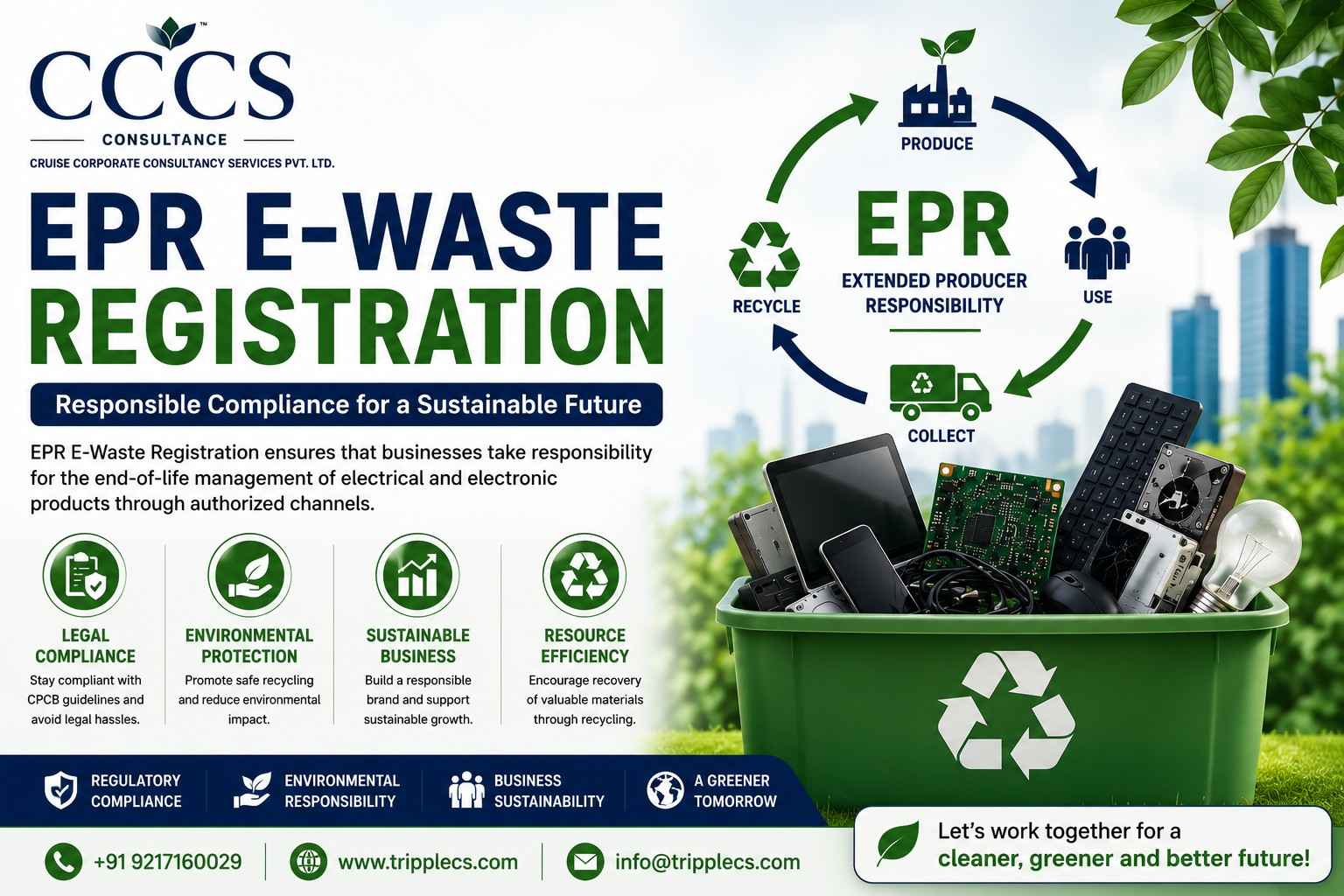

Electronic devices have become an essential part of modern life. From smartphones and laptops to televisions, printers, batteries, and other electronic equipment, businesses manufacture, import, distribute, and sell millions of electronic products every year. As technology advances rapidly, the volume of discarded electronic products continues to increase, creating a significant challenge for environmental protection.
Electronic waste, commonly known as E-Waste, contains valuable materials that can be recovered through responsible recycling. However, if not managed properly, it may also pose environmental and public health risks. To promote responsible disposal and recycling, the Government of India introduced the Extended Producer Responsibility (EPR) framework for electronic waste.
Businesses involved in manufacturing, importing, or selling electrical and electronic equipment may need EPR E-Waste Registration depending on the nature of their operations and applicable regulatory requirements.
This guide explains what EPR E-Waste Registration is, why it matters, who may require compliance, and how businesses can better understand their environmental responsibilities without getting into complex technical procedures.
Table of Contents
- What is EPR E-Waste Registration?
- Why E-Waste Management is Important
- Who Needs EPR E-Waste Registration?
- Products Commonly Covered
- Benefits of E-Waste Compliance
- Common Business Challenges
- Common Compliance Mistakes
- Why Businesses Choose Professional Assistance
- Frequently Asked Questions
- Conclusion
What is EPR E-Waste Registration?
EPR E-Waste Registration is a regulatory framework that encourages businesses to take responsibility for the environmentally sound management of electronic waste generated from the products they introduce into the market.
The concept of Extended Producer Responsibility (EPR) places responsibility on eligible businesses for ensuring that electronic products are managed responsibly after they reach the end of their useful life.
Instead of placing the entire burden on government authorities or local waste management systems, the framework encourages producers, importers, and brand owners to participate in responsible collection, recycling, and disposal through authorized channels.
Today, e waste epr registration has become an important part of environmental compliance for many businesses dealing with electrical and electronic equipment.
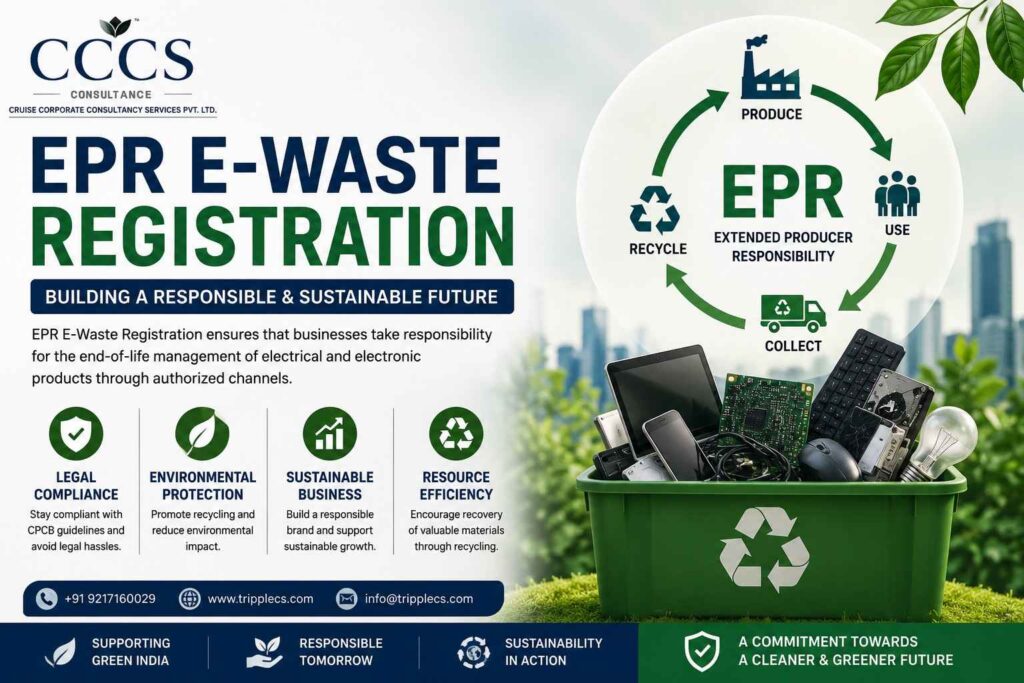
Why E-Waste Management Matters
Electronic products have transformed the way businesses and consumers operate. However, as devices become outdated or reach the end of their lifecycle, proper disposal becomes equally important.
Responsible e-waste management helps:
- Reduce environmental pollution.
- Encourage recycling of valuable materials.
- Minimize unnecessary landfill waste.
- Support sustainable resource utilization.
- Promote responsible business practices.
Businesses that understand these responsibilities contribute not only to regulatory compliance but also to long-term environmental sustainability.
Who Needs EPR E-Waste Registration?
One of the most common questions businesses ask is whether they require EPR E-Waste Registration.
The answer depends on the business model, the products handled, and the role played in introducing electronic products into the Indian market.
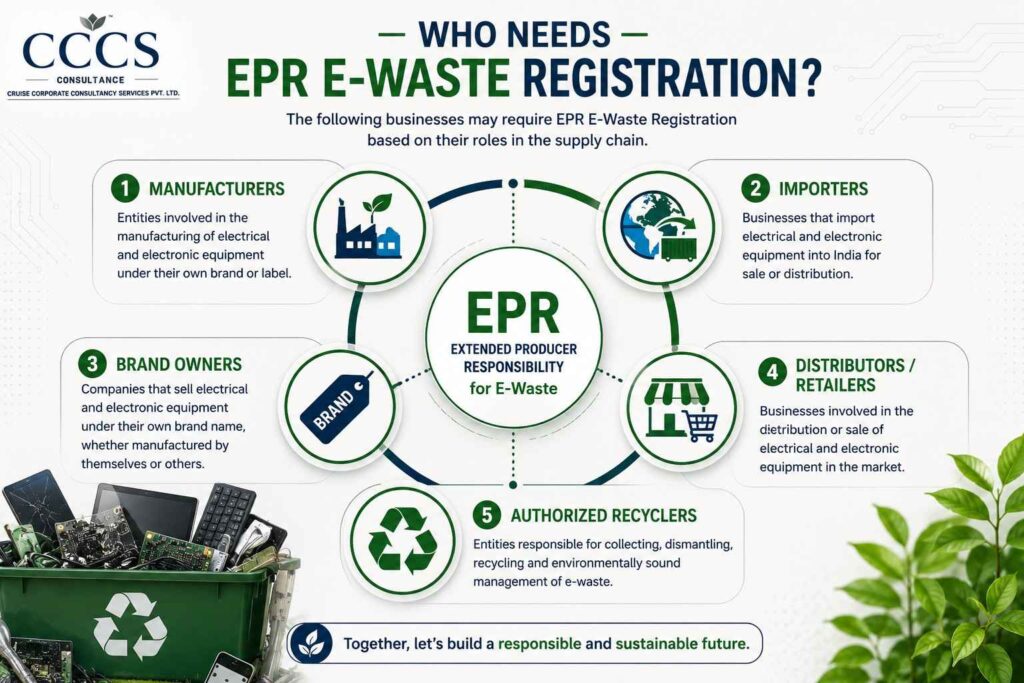
Generally, compliance may apply to businesses functioning as:
Manufacturers
Businesses involved in manufacturing electrical or electronic equipment.
Importers
Organizations importing electrical or electronic products into India.
Brand Owners
Companies selling electronic products under their own brand name.
Depending on the nature of business operations and applicable regulations, these organizations may have responsibilities under the EPR framework.
Since every business is different, evaluating compliance requirements individually is always recommended.
Products Commonly Covered Under E-Waste Compliance
Many businesses are unsure whether the products they handle fall within the scope of electronic waste regulations.
Although applicability depends on the relevant regulatory framework, businesses dealing with products such as the following should review their compliance obligations:
- Computers and Laptops
- Mobile Phones
- Tablets
- Printers
- Scanners
- Networking Equipment
- Televisions
- Audio Systems
- Consumer Electronics
- Electrical Appliances
- IT Equipment
- Electronic Accessories
Businesses introducing these products into the market should understand whether EPR E-Waste Registration applies to their operations.
Why E-Waste Compliance Matters for Businesses
Environmental compliance is becoming an increasingly important aspect of modern business.
Organizations that adopt responsible waste management practices often strengthen both regulatory preparedness and business credibility.
Some important advantages include:
Strengthens Corporate Reputation
Responsible environmental practices demonstrate professionalism and corporate responsibility.
Supports Sustainable Business Operations
Compliance contributes to better waste management and supports India’s long-term sustainability objectives.
Builds Customer Trust
Customers increasingly appreciate businesses that actively follow responsible environmental practices.
Enhances Business Credibility
Many organizations prefer working with suppliers and partners who maintain environmental compliance.
Encourages Responsible Recycling
Electronic waste contains valuable recoverable materials.
Proper recycling supports efficient resource utilization while reducing environmental impact.
Business Benefits Beyond Compliance
Many organizations initially view EPR E-Waste Registration as only a legal requirement.
In reality, businesses that proactively adopt environmental compliance often experience additional advantages, including improved market perception, stronger stakeholder confidence, and better preparedness for evolving regulatory expectations.
Responsible compliance also reflects positively on an organization’s commitment to sustainability, which has become increasingly important across industries.
Benefits of EPR E-Waste Registration for Businesses
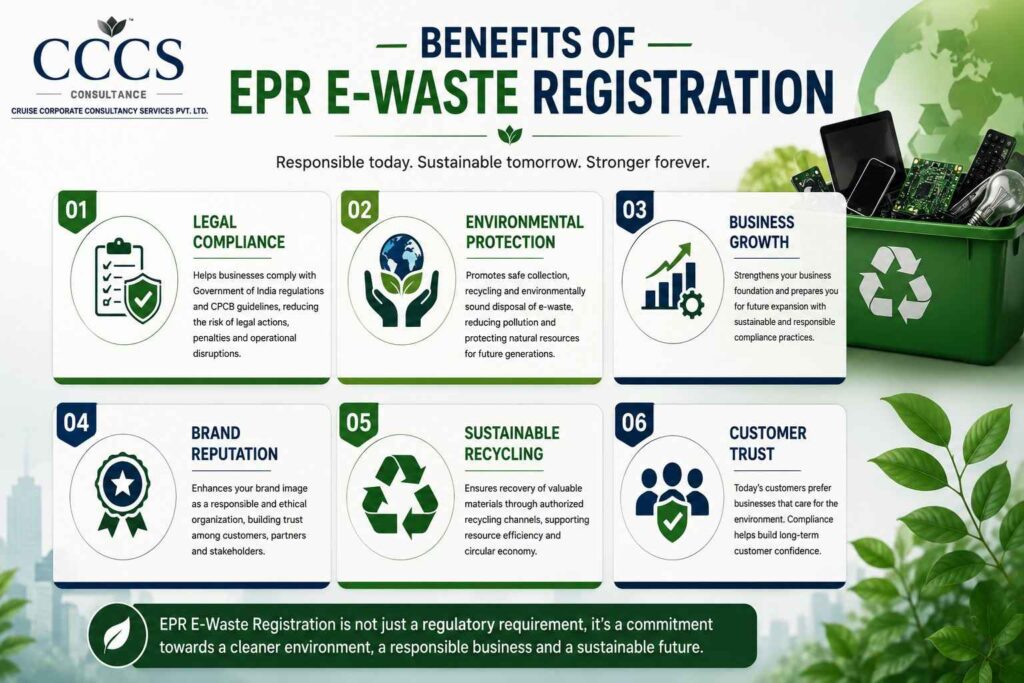
Many organizations initially consider EPR E-Waste Registration as only a compliance requirement. However, businesses that adopt responsible environmental practices often experience long-term operational and commercial benefits.
Beyond meeting regulatory expectations, compliance reflects an organization’s commitment to sustainability, responsible resource management, and corporate accountability.
1. Builds Business Credibility
Customers, distributors, investors, and business partners increasingly value organizations that follow responsible environmental practices.
By complying with applicable regulations, businesses demonstrate that they take environmental responsibilities seriously, strengthening their reputation in the marketplace.
2. Supports Sustainable Growth
Environmental responsibility has become an important part of modern business strategy.
Organizations that proactively manage compliance are often better prepared for future business expansion while maintaining responsible operational practices.
3. Strengthens Customer Confidence
Consumers today are more environmentally conscious than ever before.
Businesses that actively support responsible e-waste management often create greater trust among customers who value sustainability.
4. Encourages Responsible Recycling
Electronic devices contain valuable materials that can often be recovered through proper recycling.
Supporting responsible recycling contributes to better resource utilization while reducing unnecessary environmental impact.
5. Enhances Corporate Responsibility
Businesses that integrate sustainability into their operations often improve their Environmental, Social, and Governance (ESG) profile, making them more attractive to stakeholders and business partners.
Common Challenges Businesses Face
Although the concept of e waste epr registration appears straightforward, compliance requirements can vary depending on business activities, product categories, and regulatory obligations.
Some common challenges include:
Understanding Applicability
Many businesses are unsure whether their products fall within the scope of applicable e-waste regulations.
Understanding product categories and business responsibilities is often the first challenge organizations encounter.
Identifying Business Category
Compliance responsibilities may differ depending on whether a business operates as a manufacturer, importer, or brand owner.
Selecting the correct compliance approach requires careful evaluation of business operations.
Keeping Up With Regulatory Changes
Environmental regulations continue to evolve.
Businesses that rely on outdated information may face avoidable compliance challenges.
Remaining informed about regulatory developments is therefore essential.
Maintaining Accurate Business Information
Consistency in business information, product details, and supporting records helps reduce unnecessary delays during compliance-related activities.
Accurate information also supports smoother communication whenever clarification is required.
Managing Ongoing Compliance
Environmental compliance should not be viewed as a one-time activity.
Businesses should remain aware of their continuing responsibilities while monitoring future regulatory updates.
Common Mistakes Businesses Make During EPR E-Waste Registration
Many compliance issues arise because businesses misunderstand regulatory requirements rather than intentionally ignoring them.
Below are some common mistakes organizations should avoid.
Assuming Every Business Has Identical Requirements
No two businesses operate exactly the same way.
Compliance obligations often depend on products, operational structure, and business activities.
A standardized approach may not always be appropriate.
Delaying Compliance Planning
Waiting until compliance becomes urgent often creates unnecessary pressure.
Businesses that evaluate their responsibilities early usually have more time to prepare effectively.
Relying on Outdated Information
Environmental regulations and compliance frameworks may change over time.
Businesses should ensure they refer to current guidance and review updates regularly.
Overlooking Documentation Accuracy
Incomplete or inconsistent business information can create avoidable challenges.
Accurate records help businesses maintain smoother compliance management.
Treating Compliance as a One-Time Activity
Responsible environmental compliance continues beyond initial registration.
Businesses should periodically review their obligations and remain informed about future developments.
Documents Required – A General Overview
One of the most frequently asked questions concerns the documentation involved in EPR E-Waste Registration.
Documentation requirements are not identical for every organization.
They generally depend on factors such as:
- Nature of business
- Business category
- Type of electrical or electronic products
- Business operations
- Regulatory applicability
Since every business has different operational activities, documentation should always reflect the actual nature of the organization.
Rather than following generic online checklists, businesses are encouraged to understand their own compliance requirements before preparing documentation.
Professional guidance often helps organizations determine which documentation is appropriate for their specific circumstances.
Important: Documentation requirements vary from business to business. Businesses should always ensure that submitted information accurately reflects their operations and complies with applicable regulatory requirements.
Risks of Non-Compliance
Environmental regulations play an increasingly important role in business operations.
Organizations that overlook applicable compliance requirements may encounter operational and regulatory challenges.
Potential concerns may include:
- Regulatory scrutiny
- Business interruptions
- Increased compliance management efforts
- Reduced confidence among business partners
- Reputational concerns
- Difficulty adapting to future regulatory changes
Rather than responding after compliance issues arise, businesses generally benefit from adopting a proactive compliance strategy.
Why Businesses Prefer Professional Guidance
Although information about EPR E-Waste Registration is publicly available, understanding how regulations apply to a specific business often requires detailed evaluation.
Every organization differs in terms of:
- Products handled
- Import activities
- Manufacturing processes
- Business operations
- Supply chain
- Regulatory obligations
Professional consultants help businesses better understand their responsibilities while reducing uncertainty during compliance planning.
Many organizations seek professional guidance because it can help them:
✔ Understand applicable compliance requirements.
✔ Evaluate business-specific obligations.
✔ Improve documentation accuracy.
✔ Stay informed about regulatory developments.
✔ Focus on core business operations while managing environmental compliance more effectively.
Professional support does not replace business responsibility—it helps businesses make informed decisions based on their individual operational requirements.
If your business also deals with plastic packaging, you may need separate compliance under the Plastic Waste Management framework.
Read our complete guide: CPCB EPR Registration for Plastic Waste.
Latest E-Waste Compliance Trends Businesses Should Know
Environmental compliance in India continues to evolve as the country strengthens its focus on responsible waste management and sustainability. Businesses dealing with electrical and electronic equipment should regularly review regulatory developments that may affect their compliance responsibilities.
As technology advances and electronic products become more widely used, the importance of responsible e-waste management is increasing. Organizations that monitor compliance updates and adopt proactive environmental practices are generally better prepared to respond to changing business and regulatory expectations.
Rather than treating compliance as a one-time requirement, businesses should periodically evaluate their environmental responsibilities and ensure their practices remain aligned with current regulations.
Why Choose Cruise Corporate Consultancy Services Pvt. Ltd.?
Environmental compliance can be complex, especially for businesses dealing with multiple product categories or operating across different markets.
At Cruise Corporate Consultancy Services Pvt. Ltd., we help businesses understand their compliance requirements while providing practical guidance based on their operational needs.
Our experienced professionals assist businesses in navigating environmental and regulatory compliance with a focus on accuracy, transparency, and long-term support.
Our services include:
- EPR E-Waste Registration
- CPCB EPR Registration
- Plastic EPR Registration
- Battery EPR Registration
- Tyre EPR Registration
- Waste Oil EPR Registration
- BIS Certification
- WPC ETA Certification
- LMPC Certification
- MTCTE Certification
- DGFT & Import-Export Compliance
We believe every business deserves compliance solutions that are tailored to its specific operations rather than a one-size-fits-all approach.
Frequently Asked Questions
1. What is EPR E-Waste Registration?
EPR E-Waste Registration is a compliance framework that promotes responsible management of electronic waste by businesses that manufacture, import, or sell electrical and electronic equipment.
2. Who needs EPR E-Waste Registration?
Businesses operating as manufacturers, importers, or brand owners of applicable electronic products may have compliance obligations depending on their business activities and applicable regulations.
3. Why is E-Waste compliance important?
Responsible e-waste management supports environmental sustainability, encourages recycling, and demonstrates responsible corporate practices.
4. Is EPR E-Waste Registration applicable to all electronic businesses?
Applicability depends on factors such as product categories, business operations, and regulatory requirements. Every business should evaluate its individual compliance obligations.
5. Can businesses complete compliance without professional guidance?
While businesses may choose their preferred approach, many organizations seek professional assistance to better understand regulatory requirements and reduce compliance-related uncertainty.
6. Does EPR E-Waste Registration improve business credibility?
Yes. Environmental compliance reflects responsible business practices and may strengthen trust among customers, distributors, and business partners.
7. Do compliance requirements change over time?
Yes. Environmental regulations continue to evolve, making it important for businesses to stay informed about relevant regulatory updates.
8. How can businesses determine whether they require EPR E-Waste Registration?
A detailed evaluation of business operations, products, and regulatory applicability can help determine compliance responsibilities.
Final Thoughts
As electronic products continue to play a vital role in modern business, responsible management of electronic waste has become increasingly important.
Understanding EPR E-Waste Registration helps businesses recognize their environmental responsibilities while supporting sustainable business growth.
Whether you manufacture, import, or market electronic products, taking a proactive approach to compliance demonstrates professionalism, environmental responsibility, and long-term commitment to responsible business practices.
Since every organization has different products, operational structures, and compliance requirements, businesses should carefully evaluate their obligations and seek appropriate guidance whenever necessary.
Responsible compliance today contributes to stronger business credibility and a more sustainable future.
Need Professional Assistance?
If your business requires expert guidance regarding EPR E-Waste Registration or other environmental compliance services, our team is ready to assist.
Cruise Corporate Consultancy Services Pvt. Ltd.
🌐 Website: Tripplecs
📞 Phone: +91 9217160029
Our professional services include:
- EPR E-Waste Registration
- CPCB EPR Registration
- Plastic EPR Registration
- Battery EPR Registration
- Tyre EPR Registration
- Waste Oil EPR Registration
- BIS Certification
- WPC ETA Certification
- LMPC Certification
- MTCTE Certification
- Import-Export Compliance & DGFT Services
Contact our experts today to discuss your compliance requirements and receive professional guidance tailored to your business.