
For an importer, the arrival of a shipment should be a moment of progress—not the point where unanswered compliance questions begin.
By the time goods are approaching India, a business may already have committed significant money and time. The supplier has manufactured the products, freight has been arranged, customers or distributors may be waiting, and inventory plans may already depend on the shipment.
Yet packaged commodities can bring regulatory considerations that go beyond freight and ordinary customs documentation.
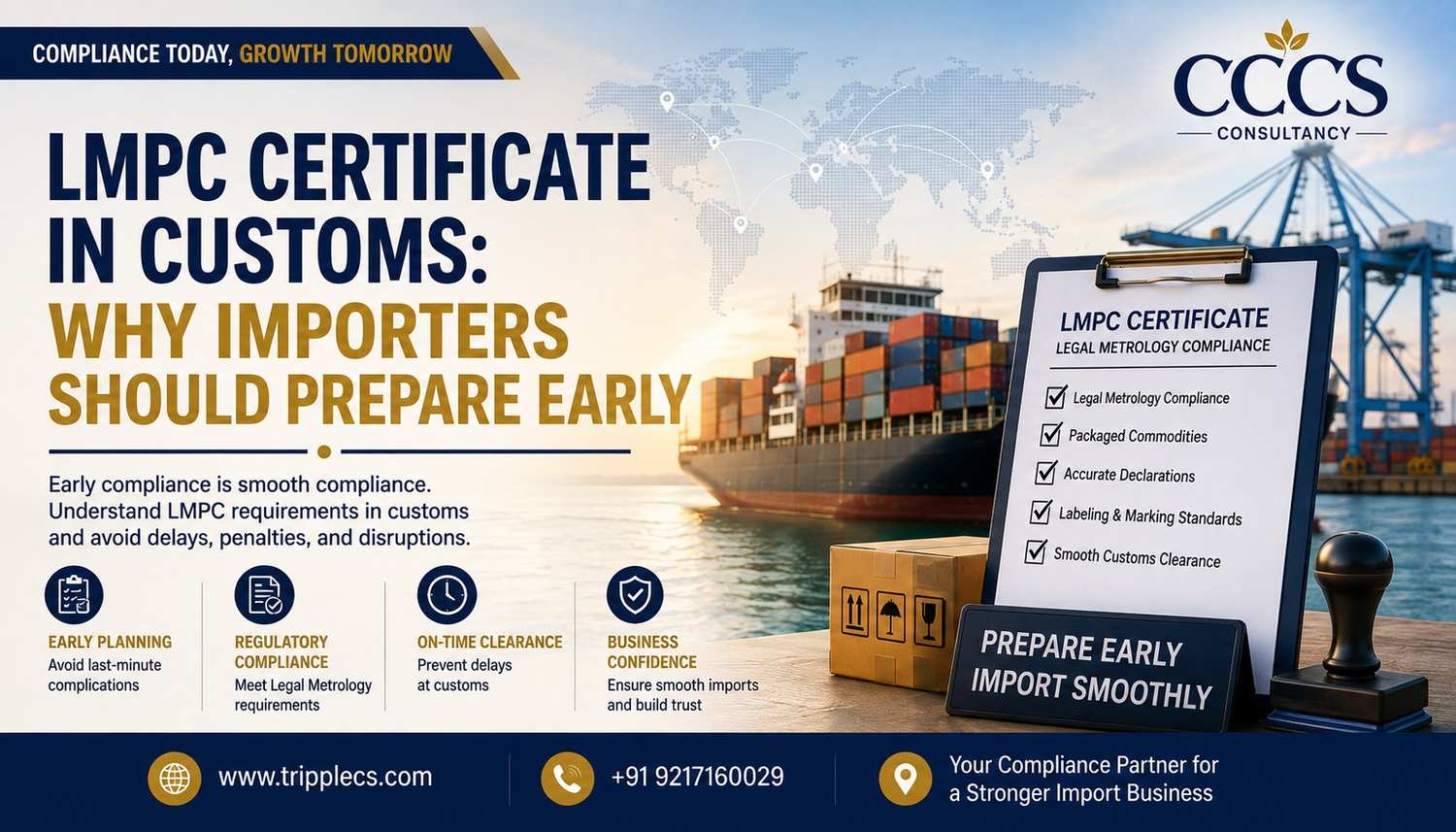
This is why businesses searching for information about an LMPC Certificate in Customs should ideally look at the subject before their shipment reaches the final stages of the import cycle.
Early clarity gives an importer something that becomes increasingly valuable once goods are moving: time to respond properly.
Customs Clearance Is Only One Part of the Import Journey
It is easy to think of importing as a straight line:
Overseas supplier → shipment → customs → warehouse → customer.
In practice, there can be several regulatory checkpoints behind that apparently simple journey.
Depending on the product and the way it is packaged or sold, an importer may need to consider requirements relating to Legal Metrology as well as other applicable product regulations.
The important point is not to assume that completing standard shipping documentation automatically means every product-related compliance requirement has been addressed.
A well-prepared importer looks at the complete commercial journey—not only transportation.
Businesses that are still preparing their compliance framework can also review the LMPC Registration Procedure before committing to important shipment timelines.
The Problem Often Starts Before the Goods Reach India
Imagine an importer preparing a new range of packaged consumer products.
Everything appears ready.
The overseas supplier has completed production. Packaging has been approved. Payment has been made. Freight arrangements are confirmed. Marketing activity may even have started.
Then someone asks a question about Legal Metrology compliance.
At this point, the problem is not necessarily that the business cannot address the requirement.
The bigger problem is timing.
When a regulatory question appears late, several teams may suddenly need to coordinate while the commercial timeline continues moving.
This is why compliance planning is most valuable when it happens before urgency begins.
Packaging Is Not Just a Marketing Decision
Packaging attracts customers, protects products and communicates a brand’s identity.
For an importer, however, packaging may have another dimension: regulatory compliance.
An overseas manufacturer may create attractive packaging according to the standards and commercial practices of its own market.
That does not automatically mean the same packaging is ready for sale in India.
Depending on the applicable requirements, declarations and other information appearing on packaged commodities may need careful review.
This creates an important distinction for importers:
A product can be commercially ready without necessarily being compliance-ready for its intended Indian market.
Recognising that difference early can prevent unnecessary confusion later.
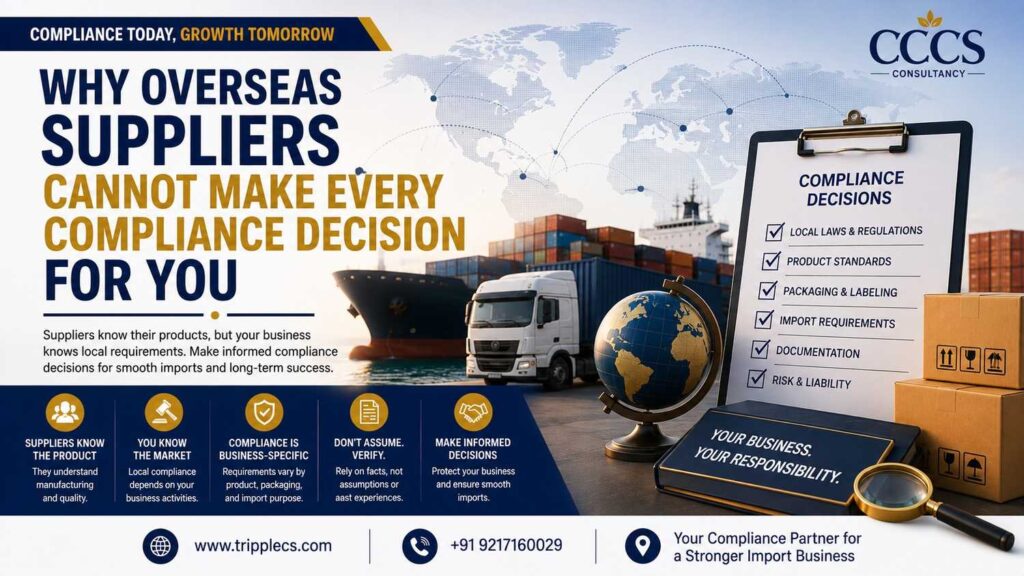
Why Overseas Suppliers Cannot Make Every Compliance Decision for You
A supplier may understand the product extremely well.
They may know its specifications, manufacturing process, packaging material and international distribution requirements.
But the importing business still needs to understand the regulatory obligations that apply to its activities in India.
This matters particularly when a manufacturer supplies products to several countries.
The same packaging or documentation approach may not necessarily work identically in every market.
Importers should therefore avoid relying entirely on statements such as:
“We export this product to many countries and have never had a problem.”
That may be reassuring from a supplier perspective, but Indian compliance requirements should still be reviewed separately.
What Does LMPC Have to Do with Customs?
Businesses often encounter the term LMPC Certificate in Customs while researching how packaged commodities are imported into India.
Legal Metrology compliance and customs operations are distinct areas, but they can intersect when imported pre-packaged commodities are subject to applicable Legal Metrology requirements.
For an importer, the practical question is therefore not simply:
“Do I have my shipping documents?”
It is also:
“Have the regulatory requirements applicable to this product and packaging been reviewed?”
That broader question encourages businesses to identify potential compliance concerns while there is still enough time to deal with them properly.
For a wider understanding of LMPC requirements specifically from an importing perspective, businesses can also read our guide on LMPC Certificate for Import.
One Importer’s Experience May Not Apply to Another
Importers regularly exchange information.
Someone in the industry might say:
“My shipment cleared without any issue.”
Another may say:
“Our supplier handled everything.”
A third may have imported similar-looking products for years.
These experiences can be useful, but they should not become the sole basis for another company’s compliance decisions.
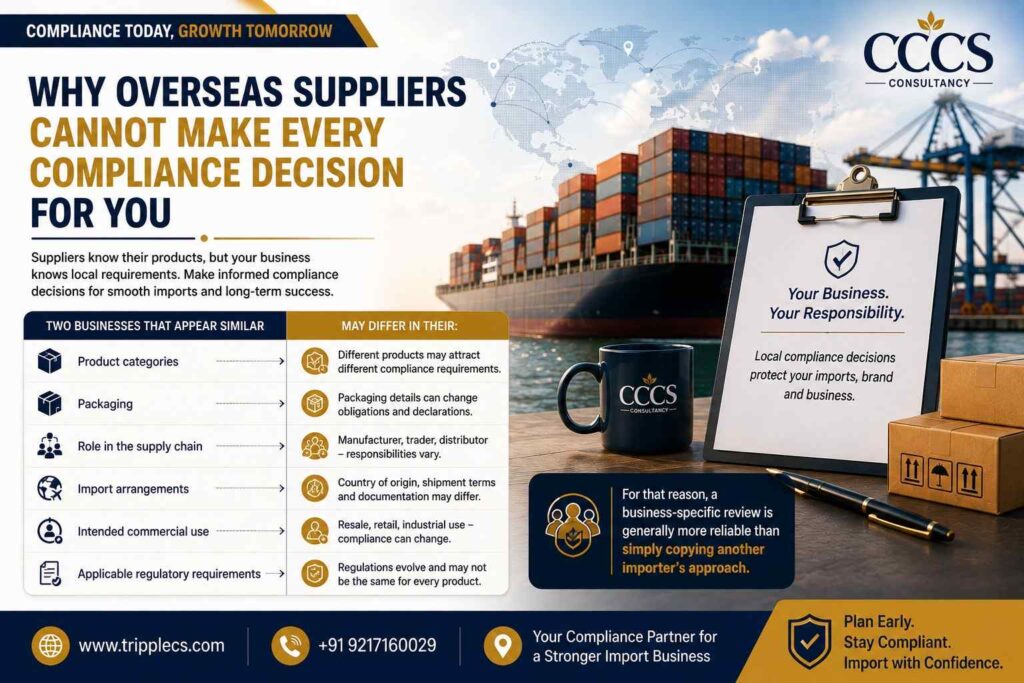
For that reason, a business-specific review is generally more reliable than simply copying another importer’s approach.
The Real Cost of a Compliance Delay May Be Commercial
Compliance discussions often focus on legal consequences.
Businesses, however, should also consider the operational consequences of poor preparation.
Suppose a shipment is connected to a planned product launch.
A delay may affect more than the shipment itself.
Inventory could arrive later than expected. Distributor commitments may need to be changed. Promotional campaigns may have to be adjusted. Customers could be left waiting. Working capital can remain tied up longer than planned.
For a growing company, these disruptions can quickly become expensive.
This is why regulatory planning should not be viewed only as a legal responsibility.
It is also part of protecting business continuity.
The First Shipment Is Not the Only One That Matters
Getting the first shipment right is important.
But serious import businesses are rarely built around a single shipment.
A company may begin with five products and eventually import fifty. One overseas supplier may become several. A small distribution arrangement may develop into a nationwide network.
As the business changes, its compliance situation can change too.
A company introducing new product categories should not automatically assume that an earlier compliance assessment covers everything it plans to import in the future.
The same principle applies when packaging changes, suppliers change or the business enters a different segment.
Good compliance management grows with the business.
Don’t Wait for a Problem to Review Compliance
There is a major difference between compliance planning and compliance correction.
Planning happens while the business still has options.
Correction often happens when something has already become urgent.
An importer preparing a shipment has time to review the product, understand potential regulatory requirements, communicate with suppliers and obtain professional advice where necessary.
An importer dealing with an unexpected issue later may have to make the same decisions under considerably more pressure.
That is why experienced businesses try to move compliance conversations earlier in the import cycle.
When Should an Importer Consider a Compliance Review?
There is no reason to wait until a problem appears.
A review can be particularly valuable when a business is preparing its first packaged-product import, introducing a new product category, changing an overseas supplier, redesigning packaging, increasing import volumes or entering the Indian market for the first time.
The objective is not to create additional paperwork.
It is to understand what applies before commercial commitments make changes more difficult.
A Good Consultant Should First Understand the Business
Compliance advice should not begin with assumptions.
Before recommending a course of action, it is important to understand what the company imports, how the products are packaged, where they come from and how they will enter the Indian market.
This is the approach followed by Cruise Corporate Consultancy Services Pvt. Ltd.
Our team works with importers to understand their business situation and identify relevant compliance considerations before providing guidance.
Instead of treating every importer as identical, the focus remains on the actual product and commercial circumstances.
This is particularly valuable for companies dealing with multiple regulations, where LMPC may be only one part of the wider compliance picture.
Your Shipment Has a Timeline. Compliance Should Have One Too.
Import planning normally has deadlines.
Production has a date.
Dispatch has a date.
Shipping has a schedule.
Product launches have targets.
Compliance deserves the same attention.
Leaving it outside the commercial timeline increases the chance that an important requirement will be discovered when there is little room to respond comfortably.
Businesses that integrate compliance into their import planning are better positioned to coordinate suppliers, logistics and market activities without unnecessary last-minute pressure.
Prepare Before Your Next Shipment Moves
If your business imports packaged commodities into India and you are unsure how LMPC Certificate in Customs requirements may relate to your products, getting clarity early can make the entire import journey easier to manage.
Cruise Corporate Consultancy Services Pvt. Ltd.
🌐 Website: tripplecs.com
📞 Phone: +91 9217160029
Our team provides professional guidance across import, certification and regulatory compliance matters, helping businesses understand requirements relevant to their operations.
You do not need to wait until goods reach customs to start asking compliance questions.