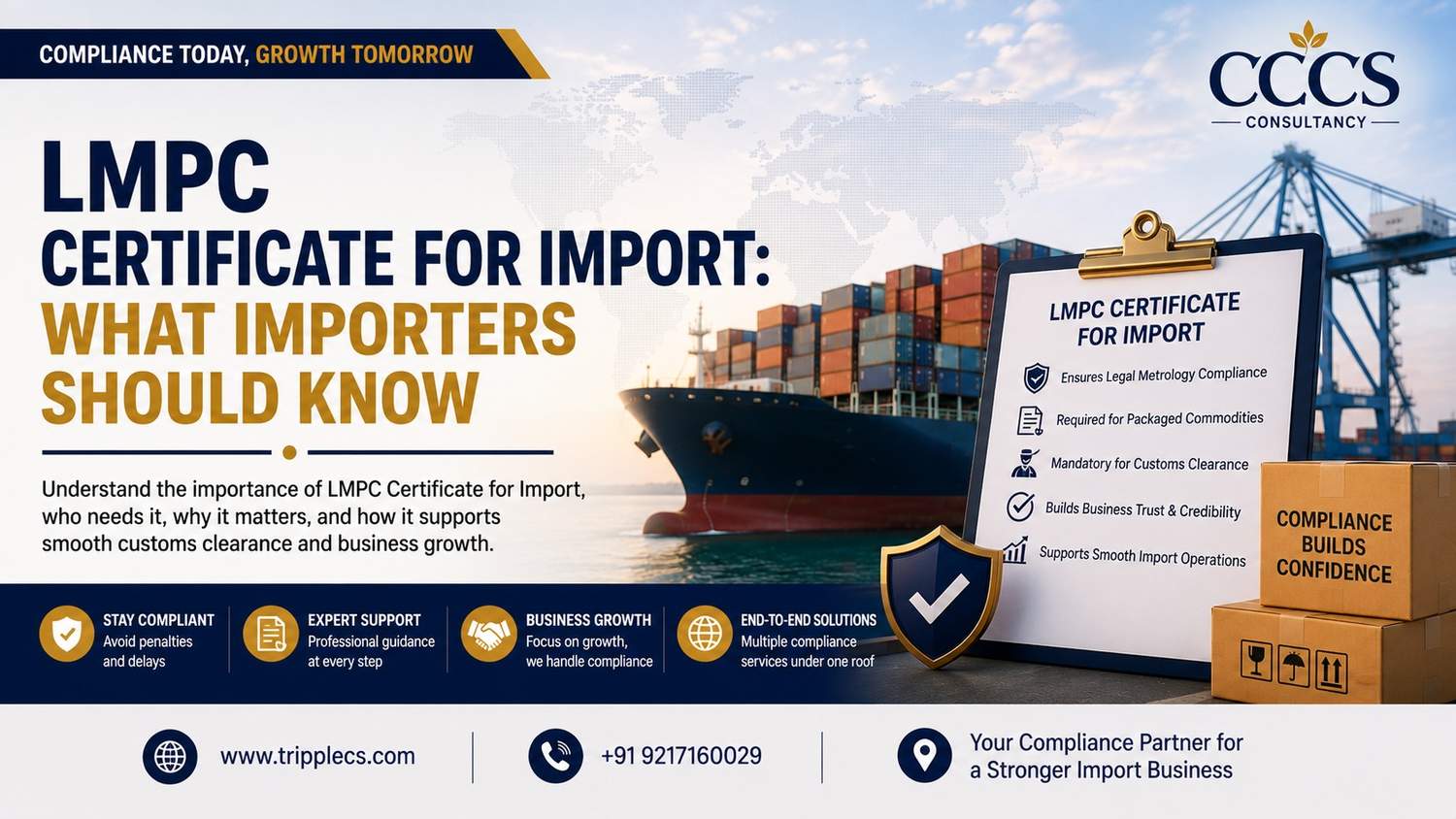

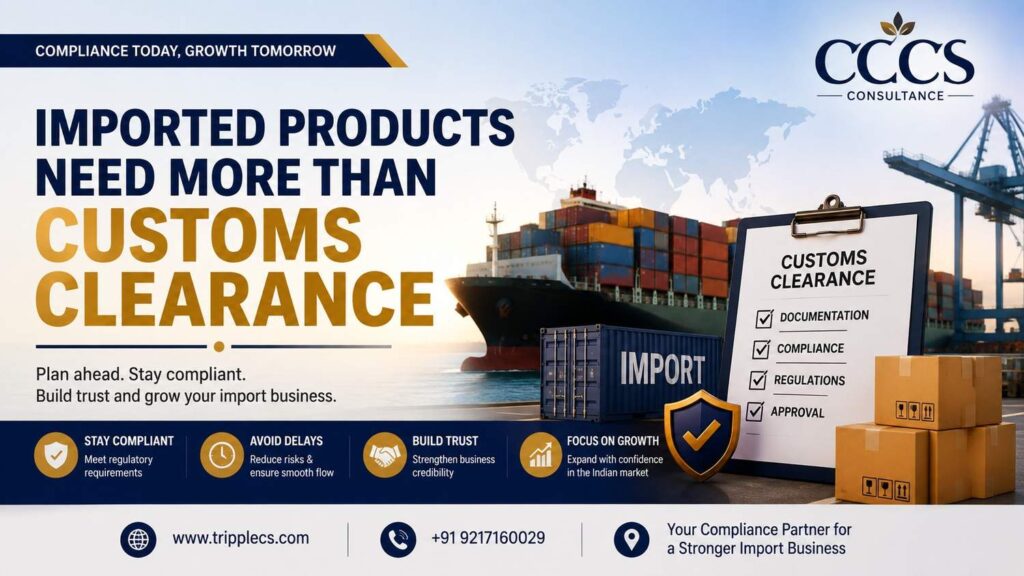
Imported Products Need More Than Customs Clearanc
Importing packaged products into India involves much more than selecting suppliers, arranging shipments, and managing delivery schedules.
Every shipment represents an investment. Businesses spend significant time negotiating prices, planning inventory, coordinating logistics, and preparing products for the Indian market. However, one aspect that is often overlooked during this process is regulatory compliance.
For many importers, this becomes an important consideration only after discussions with logistics partners, customs professionals, or regulatory advisors.
This is where the LMPC Certificate for Import becomes relevant.
Understanding its importance before products enter the market allows businesses to prepare with greater confidence and reduce the possibility of avoidable business interruptions.
Growth Creates New Responsibilities
Many businesses begin importing with only a few products.
As customer demand increases, companies often expand into new product categories, source goods from additional international suppliers, and enter different regional markets.
Business growth naturally brings greater responsibility.
Compliance becomes one of the key areas that supports sustainable expansion, particularly for businesses dealing with packaged commodities.
Rather than treating compliance as an afterthought, experienced importers often include it as part of their overall import planning strategy.
Why Businesses Start Looking for an LMPC Certificate
Every importer’s journey is different.
Some businesses discover the requirement while preparing their first shipment.
Others become aware of it after discussing product packaging, customs documentation, or regulatory expectations with experienced professionals.
In many situations, businesses begin searching for information because they want to ensure that commercial activities continue without unnecessary delays.
Common situations include:
- Planning the first import shipment.
- Expanding into packaged consumer products.
- Entering the Indian retail market.
- Working with organised distributors.
- Preparing products for commercial sale.
These situations encourage businesses to review applicable compliance requirements before moving forward.
Business Confidence Comes from Preparation
Successful importers rarely depend on assumptions.
Instead, they review important compliance requirements during the planning stage.
This approach provides better visibility into business responsibilities while helping management teams make informed commercial decisions.
Preparation also supports stronger coordination between suppliers, logistics providers, distributors, and compliance advisors.
Businesses that plan ahead are often better positioned to focus on growth instead of resolving avoidable regulatory issues.
Compliance Supports Long-Term Business Success
Today’s marketplace values reliability.
Customers, distributors, retailers, and business partners expect suppliers to operate responsibly and professionally.
Reviewing compliance requirements demonstrates that a business takes product quality, legal responsibilities, and market readiness seriously.
For growing import businesses, compliance is no longer viewed simply as a legal requirement—it has become an important part of building long-term credibility.
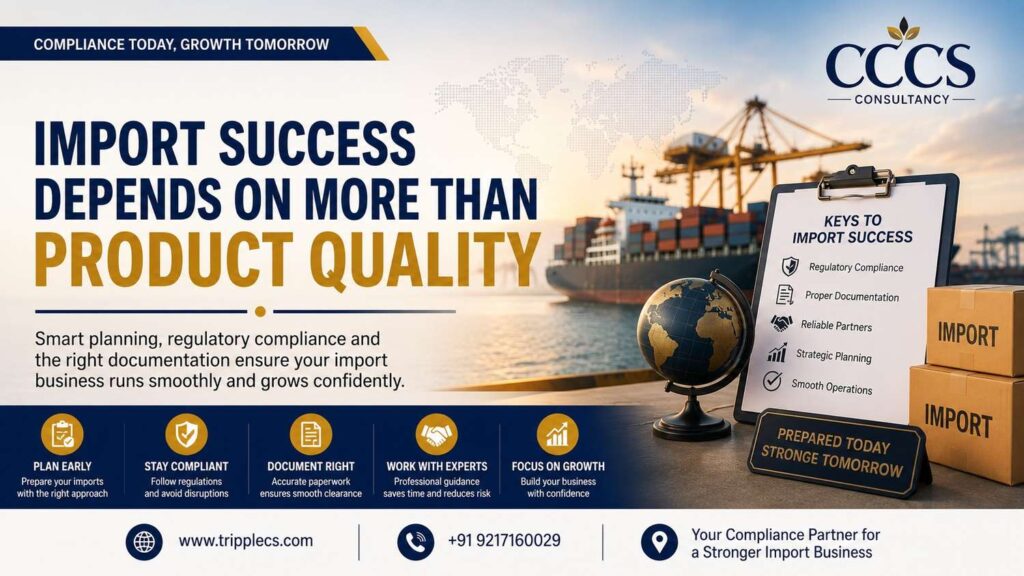
Import Success Depends on More Than Product Quality
Businesses often invest considerable effort in choosing reliable manufacturers, negotiating competitive prices, and ensuring products meet customer expectations.
While these factors are important, they alone do not determine whether an import operation runs smoothly.
Once packaged products are intended for the Indian market, businesses should also consider whether they have reviewed the applicable compliance requirements. Ignoring this aspect can create unnecessary uncertainty during commercial operations.
Importing successfully is not only about receiving products—it is about ensuring those products are ready for the market.
Every Import Business Has Different Compliance Needs
No two import businesses operate in exactly the same way.
A company importing cosmetics may have different compliance considerations than one dealing with electrical appliances, household goods, food products, or personal care items.
Similarly, a growing startup importing a limited product range may have different operational priorities compared to an established company handling multiple international suppliers.
Because every business model is unique, relying on general online advice may not always provide complete clarity.
Understanding business-specific requirements is often a better approach than assuming the same solution applies to every importer.
Why Businesses Review LMPC Compliance Before Market Launch
Many businesses begin reviewing compliance only when products are ready to be distributed.
However, experienced importers often prefer to evaluate important requirements much earlier.
This helps them:
- Prepare products for commercial distribution.
- Coordinate more effectively with logistics partners.
- Build confidence before market expansion.
- Reduce avoidable interruptions during business operations.
- Focus on customers rather than last-minute compliance concerns.
Planning ahead allows businesses to move forward with greater certainty.
Understanding the Role of the LMPC Certificate in Customs
For businesses importing packaged commodities, regulatory compliance may become part of the overall customs and import process.
This is one reason many importers also search for information related to the LMPC Certificate in Customs while planning international shipments.
Rather than waiting until products arrive, reviewing applicable compliance expectations in advance allows businesses to coordinate documentation and commercial activities more efficiently.
Preparation is generally more effective than responding to unexpected compliance questions later.
Practical Planning Helps Businesses Stay Competitive
Growing businesses operate in highly competitive markets where delivery timelines, customer expectations, and operational efficiency all matter.
Delays caused by incomplete planning can affect product launches, inventory schedules, and business commitments.
Businesses that include compliance within their import planning are often better positioned to respond quickly to new opportunities while maintaining smoother day-to-day operations.
Good planning is not simply about meeting legal expectations—it also supports stronger business performance.
Professional Guidance Supports Better Business Decisions
Import regulations can appear straightforward until businesses begin dealing with different product categories, suppliers, and commercial requirements.
Instead of trying to interpret every regulation independently, many companies choose to work with experienced compliance professionals who understand how different business situations may influence regulatory responsibilities.
Professional guidance helps business owners make informed decisions while allowing them to concentrate on expanding their operations, serving customers, and developing long-term growth strategies.
Importing with Confidence Begins Long Before Products Reach Customers
Successful import businesses understand that growth is built on preparation.
Finding reliable suppliers, arranging international shipments, and developing new markets are all important achievements. However, sustainable growth also depends on ensuring that business operations are supported by the right compliance strategy.
Businesses that plan ahead are often able to respond more confidently to customer expectations, market opportunities, and changing regulatory environments.
Rather than treating compliance as a final task before selling products, experienced importers view it as part of responsible business management.
The Right Advice Can Save More Than Time
Many businesses spend weeks comparing freight costs, negotiating with overseas manufacturers, and planning their inventory.
When it comes to compliance, however, uncertainty often leads to unnecessary delays.
Professional guidance helps businesses understand what is relevant to their operations without relying on assumptions or incomplete online information.
Instead of searching for answers after a shipment is ready, companies that seek advice early are usually better prepared to make informed commercial decisions.
The objective is not simply to obtain a certificate—it is to support smoother business operations from the beginning.
How Cruise Corporate Consultancy Services Pvt. Ltd. Supports Import Businesses
At Cruise Corporate Consultancy Services Pvt. Ltd., we understand that every import business operates differently.
Some businesses are preparing their first international shipment, while others are expanding into new product categories or entering larger distribution networks.
Our approach begins with understanding your business activities before recommending the most appropriate compliance strategy.
We believe practical guidance should be tailored to your business objectives, helping you move forward with greater clarity and confidence.
Our goal is to simplify complex compliance requirements so that you can remain focused on growing your business.
Looking Beyond One Compliance Requirement
Import businesses often need to review multiple regulatory requirements as they grow.
As product ranges expand and new markets are explored, businesses may also consider related compliance services such as:
- Import Export Code (IEC)
- AD Code Registration
- BIS Certification
- WPC ETA Approval
- ROHS Compliance
- GST Registration for Business Activities
Understanding how these services fit into your business journey can help create a stronger compliance foundation for future expansion.
Need Professional Guidance?
If your business is planning to import packaged products and would like professional assistance regarding the LMPC Certificate for Import, our team is ready to help.
Cruise Corporate Consultancy Services Pvt. Ltd.
🌐 Website: https://tripplecs.com/
📞 Phone: +91 9217160029
We provide practical consultancy services designed to help businesses understand compliance requirements, reduce uncertainty, and move forward with confidence.
Whether you are importing packaged consumer goods for the first time or expanding an existing import business, our consultants are here to support your compliance journey.
Final Thoughts
Every successful import business is built on careful planning—not only in sourcing products but also in preparing for the responsibilities that come with entering the market.
The LMPC Certificate for Import should not be viewed as an isolated compliance requirement. Instead, it should be considered part of a broader strategy that supports operational efficiency, business credibility, and long-term growth.
Businesses that invest time in understanding their compliance responsibilities today are often better positioned to build stronger customer relationships and expand confidently in the future.