
Quality problems do not always begin with the final product or service. They can start much earlier—with unclear processes, inconsistent responsibilities, weak controls, poor communication, or a management system that has not kept pace with the business.
This is where ISO 9001 Consulting Services can support an organization.
ISO 9001 provides a globally recognized framework for Quality Management Systems (QMS). The current edition, ISO 9001:2026, was published in September 2026 and focuses on helping organizations improve performance, meet customer expectations and continually improve their quality management systems. ISO
However, effective ISO 9001 implementation should not begin with the question, “How quickly can we get the certificate?”
A better starting point is:
How can our quality management system reflect the way our business actually operates and improve it?
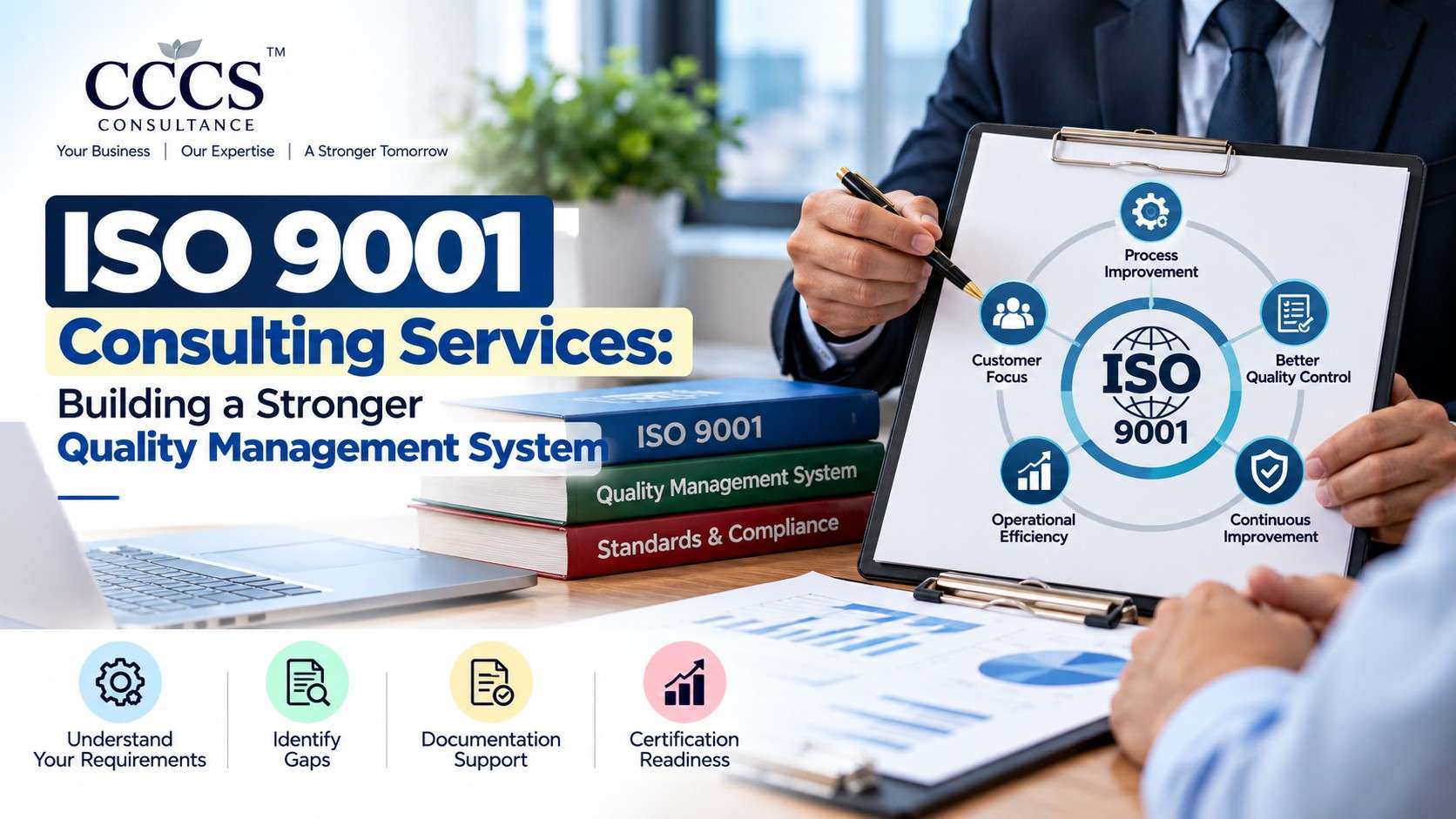
What Are ISO 9001 Consulting Services?
ISO 9001 Consulting Services help businesses understand, develop, implement and improve a Quality Management System aligned with ISO 9001 requirements.
Consulting support can help an organization understand its current processes, identify gaps, establish an appropriate QMS, align documentation with actual operations and prepare the business for an independent certification assessment.
The level of support required can vary considerably. A new business developing its first formal quality system may have different requirements from an established organization that already has procedures but wants to align them with ISO 9001.
A good consulting engagement should therefore begin with the business, not with a generic set of documents.
ISO 9001 Is More Than a Business Certificate
For a business considering ISO certification, the certificate may be important—but it should not become the entire purpose of the project.
ISO describes ISO 9001 as a quality management standard that defines requirements for establishing, implementing, maintaining and continually improving a QMS. Certification itself is voluntary, although customers, contracts or business opportunities may create a practical requirement for it. ISO
This distinction matters.
A company can obtain greater long-term value when ISO 9001 becomes part of how it manages quality rather than something prepared only for an audit.
An effective QMS should support the organization in areas such as consistent processes, customer focus, accountability, performance monitoring and continual improvement.
Your Existing Business Processes Come First
Every organization operates differently.
A manufacturing company may need to manage production controls, suppliers and product quality. A service company may be more concerned with service delivery, customer requirements, complaints and consistency across teams.
Therefore, the same generic QMS should not simply be copied from one business to another.
Before designing or improving a quality management system, the organization should understand:
- what it provides to customers;
- how its important processes interact;
- who is responsible for those processes;
- where quality risks or inconsistencies exist; and
- what customers and other relevant parties expect.
ISO 9001 consulting becomes more valuable when the management system is developed around these realities.
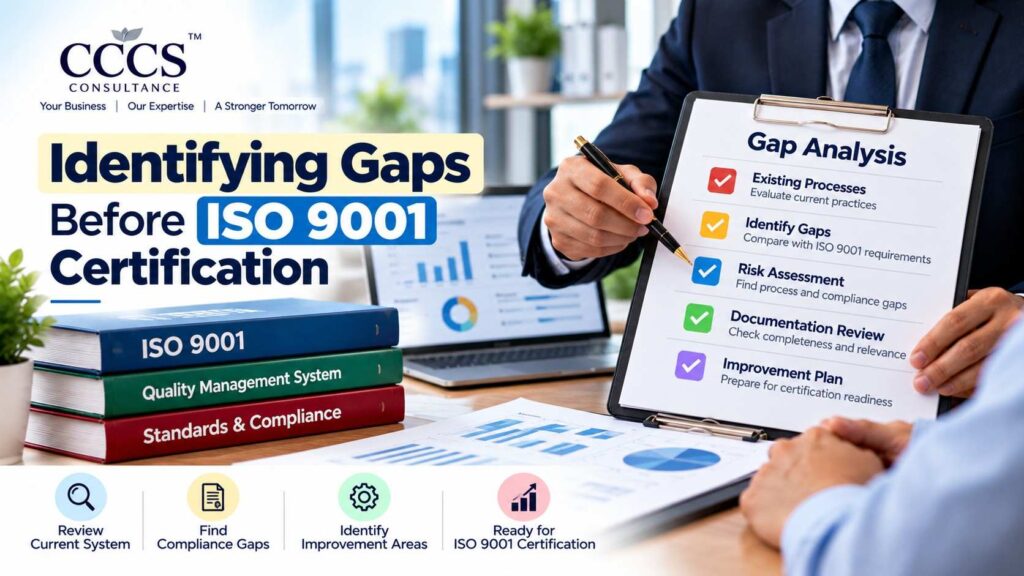
Identifying Gaps Before ISO 9001 Certification
A business may already have many quality-management practices without calling them a “QMS.”
There may already be processes for customer orders, supplier evaluation, complaints, quality checks, employee responsibilities or performance reviews.
The issue is whether these processes collectively meet the applicable ISO 9001 requirements and whether they work consistently.
An ISO 9001 consultant can review the existing system and identify areas where additional attention may be required.
This does not necessarily mean replacing everything the company already does.
In many cases, the better approach is to understand what is working, identify what is missing or ineffective, and strengthen the existing system accordingly.
Documentation Should Match Actual Business Operations
One common mistake in ISO implementation is creating documentation simply because a business believes an auditor expects to see it.
Documentation that looks impressive but does not reflect actual operations can become difficult to maintain and may provide little practical value.
For example, if a written procedure describes one method while employees consistently use another, the issue is not solved merely because the procedure exists.
ISO documentation should support the management system—not become a separate system that exists only on paper.
Professional ISO 9001 consulting should therefore focus on relevant documentation that corresponds with actual business processes, responsibilities and controls.
Employee Involvement Matters in ISO 9001
A Quality Management System cannot operate effectively through the consultant or senior management alone.
Employees involved in relevant processes need to understand their responsibilities and how their work contributes to quality.
This has become particularly relevant under ISO 9001:2026, which places stronger emphasis on leadership, quality culture, accountability and awareness while retaining customer focus, process thinking and continual improvement at the heart of the standard. ISO
This means ISO 9001 implementation should not simply result in a folder of documents.
The people responsible for carrying out the processes need to understand the system behind those documents.
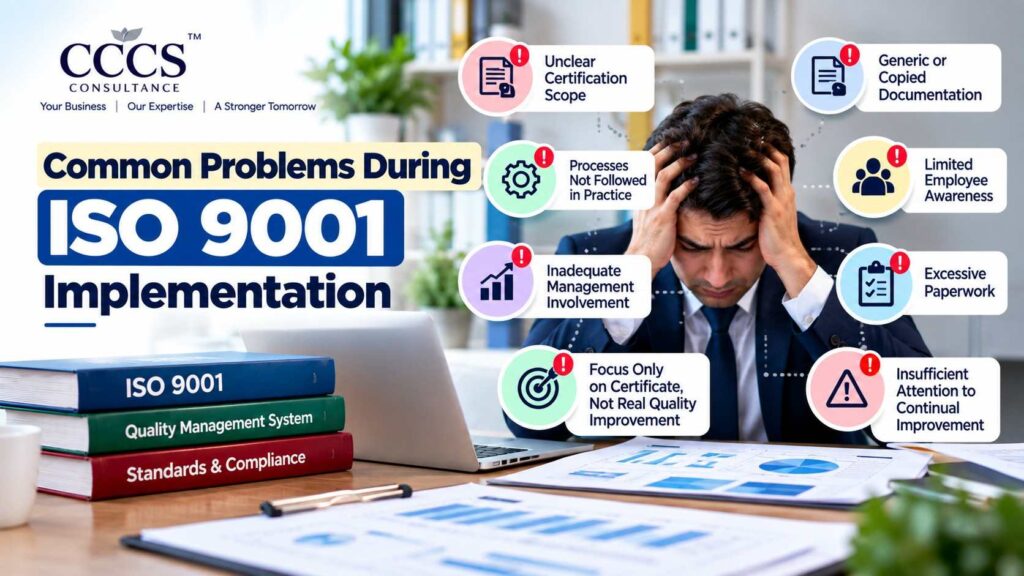
Common Problems During ISO 9001 Implementation
Businesses can encounter difficulties when ISO 9001 is approached primarily as a certificate-purchasing exercise.
Problems may include an unclear certification scope, generic documentation copied from another organization, processes that exist on paper but are not followed in practice, limited employee awareness, inadequate management involvement or insufficient attention to continual improvement.
Another common issue is trying to build an unnecessarily complicated system.
A QMS should be appropriate to the organization. Adding excessive documentation and controls can create administrative work without necessarily improving quality.
This is one reason ISO 9001 Consulting Services should be tailored to the size, activities, maturity and actual requirements of the business.
ISO 9001 Consultant and Certification Body Have Different Roles
Businesses should clearly understand this distinction.
An ISO 9001 consultant can support the organization with QMS development, gap identification, implementation guidance, documentation and certification readiness.
The certification body independently assesses whether the management system conforms to the applicable requirements and issues certification where appropriate.
ISO itself does not certify companies or issue ISO certificates. Certification is performed by external certification bodies. ISO also recommends evaluating certification bodies and checking accreditation where relevant. ISO
This separation helps preserve the independence of the certification assessment.
For authoritative information about certification, businesses can refer directly to the official ISO certification guidance.
ISO 9001 for Growing Businesses
A quality management system should be capable of supporting change.
A business may begin with one office, a small team and a limited range of services. Later, it may add locations, employees, suppliers, products, technologies or new customer requirements.
These changes can affect the QMS.
This is why ISO implementation should not be designed only around the organization’s current certification audit.
A well-planned system should remain practical as the organization develops.
For growing businesses, professional ISO consulting can help assess whether changes in operations require corresponding changes to processes, responsibilities, controls or the certification scope.
Certification Is Not the End of the Quality Journey
ISO 9001 is built around continual improvement.
After certification, the organization still needs to operate, maintain and improve its QMS. ISO notes that regular audits and reviews support ongoing optimization and continual refinement of quality management systems. ISO
The recent transition to ISO 9001:2026 demonstrates why management systems cannot simply be created once and forgotten.
Organizations already certified to ISO 9001:2015 have a transition period to move to ISO 9001:2026; ISO says they do not need to restart the certification process from the beginning. ISO
Therefore, businesses should think beyond obtaining the initial certificate and consider how the QMS will continue to operate as requirements and business circumstances evolve.
When Should a Business Consider ISO 9001 Consulting Services?
Professional assistance can be useful when an organization is considering ISO 9001 for the first time, has received an ISO requirement from a customer or tender, needs to formalize an existing quality system, is expanding operations or is experiencing difficulty maintaining consistent processes.
Consulting can also be relevant when an existing certified organization needs to review its QMS because of significant operational changes or the transition to the latest edition of ISO 9001.
The objective should not simply be to add more paperwork.
The objective should be to develop a Quality Management System that is appropriate for the organization and capable of supporting consistent performance and continual improvement.
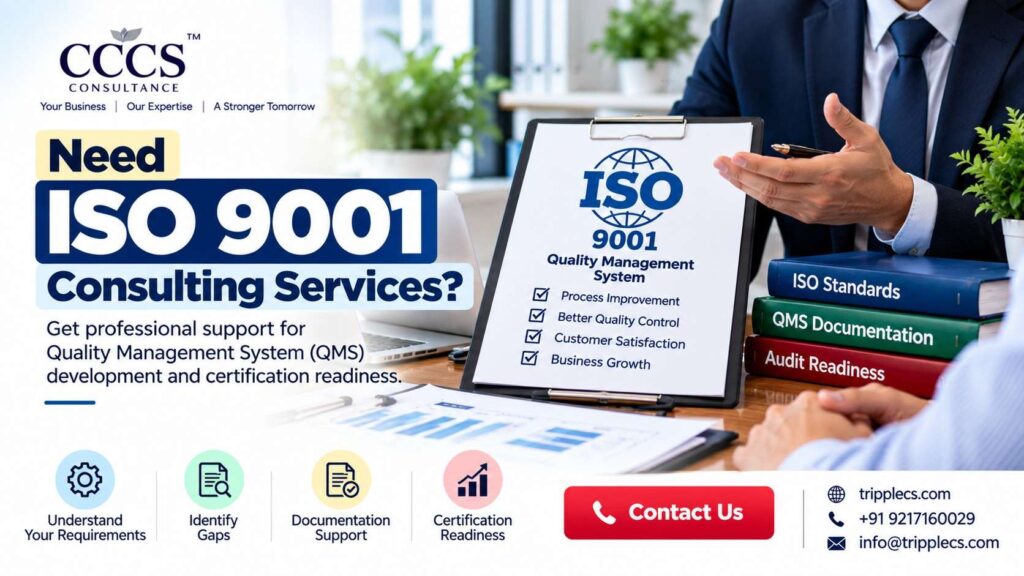
Need ISO 9001 Consulting Services?
Cruise Corporate Consultancy Services Pvt. Ltd. (CCCS) provides professional ISO 9001 Consulting Services for businesses seeking support with Quality Management System development and certification readiness.
Our support can include understanding your business requirements, reviewing existing processes, identifying QMS gaps, documentation guidance, implementation support and coordination related to certification readiness.
Instead of applying the same approach to every organization, the requirements should be considered according to the business activities, existing systems and certification objectives.
Website: tripplecs.com
Phone: +91 9217160029
Email: info@tripplecs.com
CCCS — Professional Support for Business Setup, Registration, Certification & Compliance Services.