
Starting an export business involves much more than finding overseas buyers and preparing products for international markets. Every successful export transaction also depends on completing important banking and customs formalities that help goods move smoothly through Indian ports.
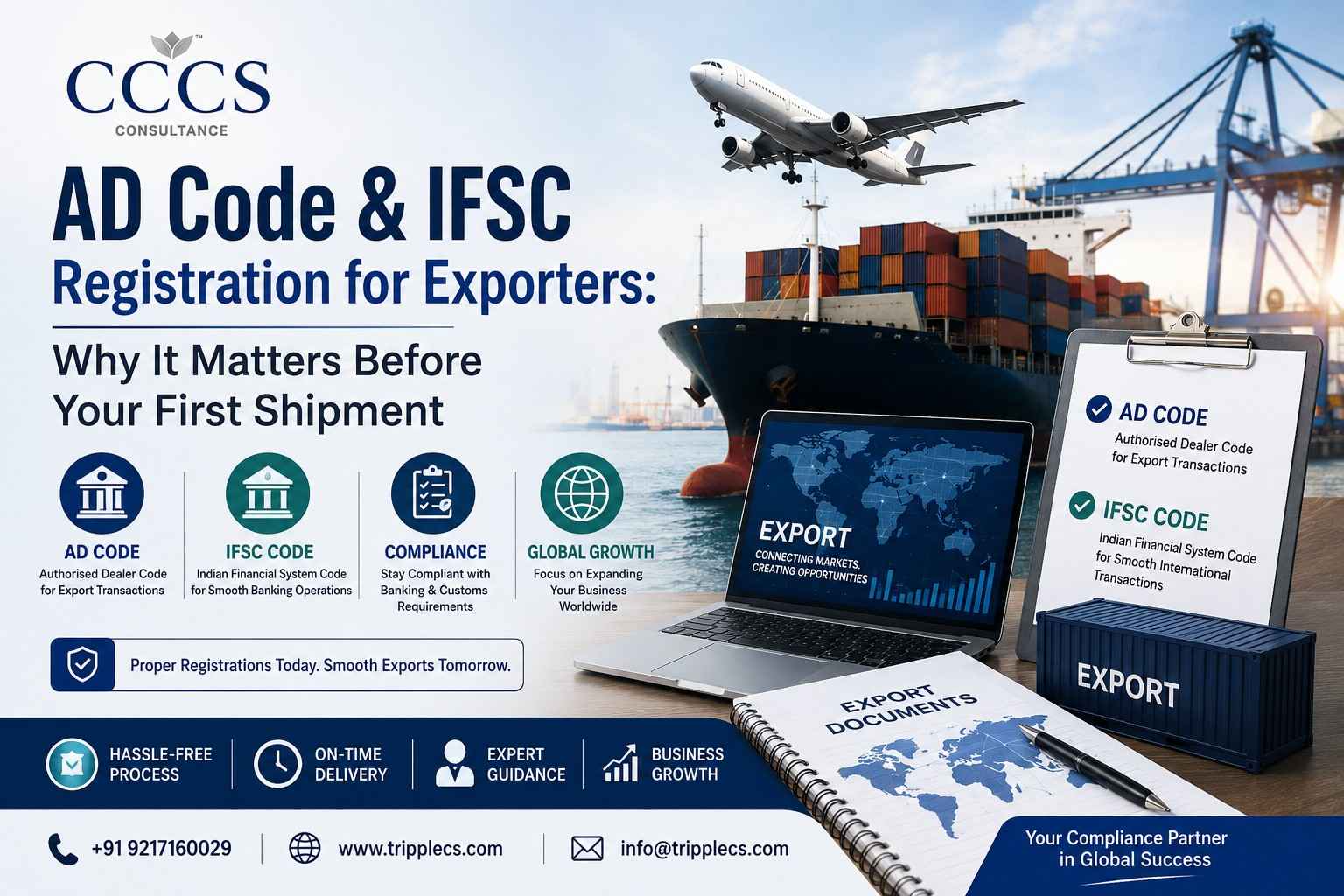
Among these requirements, AD Code & IFSC Registration for Exporters plays an important role. Whether you are exporting for the first time or managing regular international shipments, understanding these banking requirements can help reduce unnecessary delays and improve coordination between your bank and customs authorities.
Many exporters only learn about these requirements after their shipment reaches the port. By that stage, incomplete banking information or missing registrations may affect the export process and create avoidable complications.
This guide explains why AD Code Registration and IFSC details are important, who should consider them, and why proper compliance supports smooth international trade.
International Trade Begins with Proper Banking Compliance
Exporting products is not limited to manufacturing, packaging, or shipping.
Every international transaction also involves financial communication between exporters, banks, customs authorities, and government systems.
For this reason, exporters are expected to maintain accurate banking information connected with their export activities.
When banking details are properly linked with export documentation, businesses are generally better prepared for customs procedures and international payment processes.
Understanding these requirements early helps exporters avoid unnecessary confusion when planning their overseas shipments.
What is an AD Code?
An Authorised Dealer (AD) Code is a unique code issued by an authorised bank dealing in foreign exchange.
The code helps establish the connection between an exporter’s bank and customs-related systems for export transactions.
Instead of viewing it as only a banking formality, exporters should understand that the AD Code supports communication between different stakeholders involved in international trade.
Because export procedures often involve customs clearance and banking documentation, maintaining correct banking information becomes an important operational requirement.
Understanding the Role of IFSC
The Indian Financial System Code (IFSC) identifies the specific bank branch where an exporter’s account is maintained.
It helps ensure banking transactions are routed accurately through India’s banking network.
Although exporters are generally familiar with IFSC codes during everyday banking activities, its importance also extends to export-related financial processes.
Maintaining accurate banking information contributes to smoother communication between financial institutions and export documentation systems.
Why Exporters Should Understand Both AD Code and IFSC
Many new exporters focus primarily on obtaining export licences or finding international buyers.
However, banking compliance deserves equal attention.
Understanding both AD Code Registration and accurate IFSC information helps businesses prepare for international trade more effectively.
Proper banking coordination supports:
- Better export documentation
- Improved banking communication
- More efficient customs coordination
- Organized financial records
- Greater operational confidence
Rather than treating these requirements as separate formalities, businesses should view them as important components of successful export operations.
Who Should Consider AD Code & IFSC Registration?
Not every business has identical export responsibilities.
However, organizations involved in international trade should evaluate whether these banking requirements apply to their operations.
This may include businesses such as:
Exporters
Companies exporting products from India to overseas markets.
Manufacturers Entering Global Markets
Manufacturers expanding beyond domestic sales often need to review export-related banking requirements before dispatching international shipments.
Merchant Exporters
Businesses purchasing products from suppliers and exporting them under their own business operations.
Import-Export Companies
Organizations engaged in both import and export activities should regularly review banking and customs compliance requirements applicable to their operations.
Businesses Expanding Internationally
Companies entering new international markets should ensure their banking and export documentation remains aligned with current business activities.
Why Proper Banking Preparation Matters
Many export-related delays occur because businesses begin preparing banking formalities only after receiving export orders.
A better approach is to review banking requirements before export operations begin.
Businesses that prepare early are often better positioned to:
- Respond quickly to customer orders.
- Coordinate more efficiently with customs authorities.
- Maintain organized export documentation.
- Strengthen operational planning.
- Reduce unnecessary administrative delays.
Preparing banking compliance in advance helps businesses focus on serving customers rather than resolving documentation issues during shipment.
A Practical Business Example
Imagine a manufacturing company receives its first export order from Europe.
Production is complete.
Packaging is ready.
Logistics has been arranged.
However, during shipment planning, the company discovers that important banking formalities still require attention.
Instead of dispatching goods immediately, additional time is spent coordinating with the bank and reviewing export-related requirements.
Although every business situation is different, planning banking compliance earlier often helps avoid unnecessary delays during export operations.
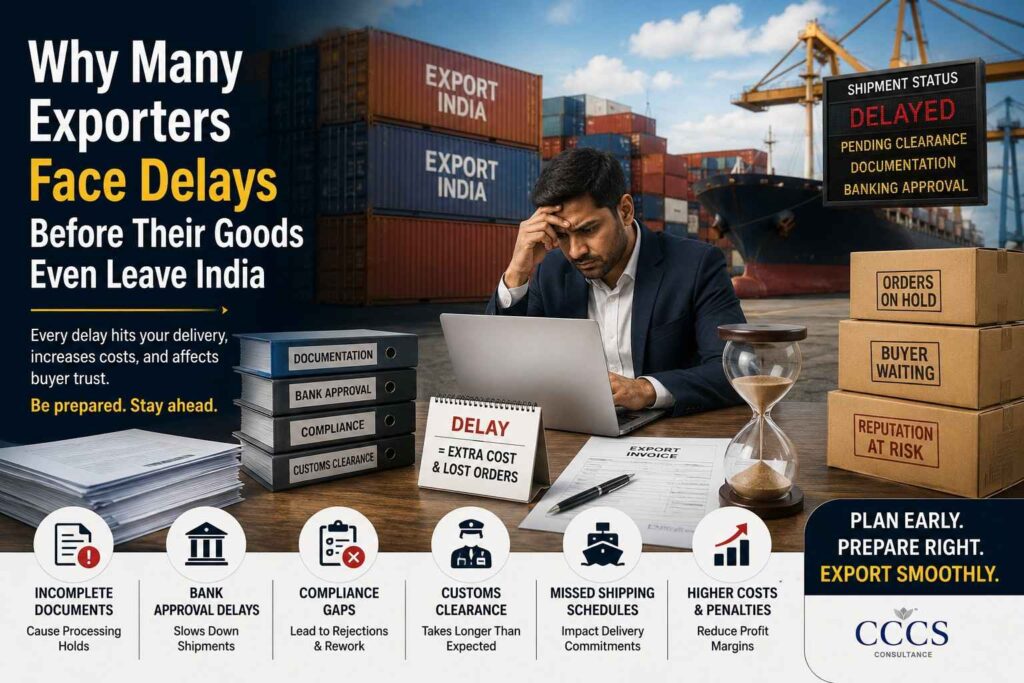
Why Many Exporters Face Delays Before Their Goods Even Leave India
For many businesses, the biggest challenge in exporting is not finding buyers—it is preparing the business for international trade.
A shipment may be packed, invoices may be ready, and logistics may already be booked. Yet a small compliance issue connected with banking or customs can interrupt the process and delay dispatch.
Most of these situations are preventable when businesses prepare before receiving their first export order.
Export Readiness Is More Than Documentation
Successful exporters usually build a system rather than reacting to individual shipments.
Being export-ready means your business is prepared in advance—not only with products but also with the banking, customs, and compliance requirements that support international trade.
Businesses that prepare early often experience:
- Faster coordination with banks.
- Better communication with customs authorities.
- Greater confidence while handling export orders.
- Fewer unexpected delays.
- Improved operational planning.
Preparing early allows exporters to focus on customers instead of last-minute formalities.
Small Oversights Can Create Bigger Problems
Many export-related delays do not occur because businesses lack products or buyers.
They occur because important compliance activities receive attention only after the shipment is scheduled.
Some examples include:
- Banking information requiring correction.
- Mismatch between export records.
- Delayed coordination between different stakeholders.
- Incomplete customs-related formalities.
- Confusion regarding export banking requirements.
Although every business situation is different, reviewing compliance before shipping often reduces avoidable complications.
Questions Every New Exporter Should Ask
Before expanding into international markets, businesses should evaluate their preparedness.
Consider questions such as:
- Is our export banking information up to date?
- Have we reviewed the banking requirements linked to exports?
- Are our customs-related formalities aligned with current business operations?
- Is our documentation organized for future export activities?
- Have we consulted experts before beginning exports?
These questions help businesses identify areas requiring attention before operational issues arise.
Why Businesses Seek Professional Guidance
International trade involves multiple organizations working together, including exporters, banks, customs authorities, logistics providers, and regulatory systems.
Because every business operates differently, applying generic online advice may not always produce the desired outcome.
Professional consultancy helps businesses understand:
- The compliance requirements relevant to their business model.
- Banking and customs coordination.
- Current regulatory expectations.
- Business-specific documentation needs.
- Future export planning.
Instead of searching through multiple online sources, many exporters prefer working with experienced professionals who can guide them according to their individual business requirements.
Think Beyond Your First Export Order
Many companies begin their export journey with one shipment.
Successful exporters, however, think much further.
They create systems that support:
- Future international expansion.
- Better customer service.
- Consistent banking coordination.
- Organized compliance records.
- Long-term business growth.
Planning today often makes tomorrow’s export operations smoother and more efficient.
A Growing Business Needs Strong Foundations
Exporting is not only about selling products overseas.
It is about building a reliable business capable of serving international customers consistently.
Businesses that establish proper banking and compliance practices from the beginning often find it easier to scale into new countries and manage larger export volumes.
Strong foundations create confidence—for the business, banking partners, and international buyers alike.
Beyond Compliance: Building an Export-Ready Business
Every successful exporter shares one common habit—they prepare before opportunities arrive.
International buyers expect suppliers who can respond quickly, meet documentation requirements, and deliver shipments without unnecessary delays. Businesses that invest time in organizing their export compliance from the beginning often find it easier to build trust and expand into new markets.
Preparing your business today means you can focus on growth tomorrow instead of rushing to resolve compliance issues at the last moment.
Why Businesses Prefer Professional Support
Export compliance is not always about completing a registration. It’s about understanding how different requirements work together.
For example, a manufacturer exporting machinery may have different compliance needs from a merchant exporter dealing in consumer products. Similarly, businesses exporting through different ports or banks may encounter different procedural requirements.
This is why many exporters choose professional guidance instead of relying on scattered online information. Expert support helps businesses understand their obligations, avoid unnecessary delays, and move forward with greater confidence.
How Cruise Corporate Consultancy Services Pvt. Ltd. Supports Exporters
At Cruise Corporate Consultancy Services Pvt. Ltd., we understand that every export business has different objectives and compliance requirements.
Whether you’re preparing for your first overseas shipment or managing regular exports, our team works closely with you to understand your business and provide practical guidance based on your operational needs.
We focus on simplifying compliance so that business owners can spend more time expanding into global markets and less time dealing with administrative complexities.
Our consultancy supports businesses across various regulatory and trade-related services, helping them build a stronger foundation for international business.
Start Your Export Journey with Confidence
International trade offers significant opportunities, but success depends on careful planning as much as quality products.
Understanding banking requirements, maintaining accurate records, and preparing the right compliance framework can make the export process more organised and predictable.
Rather than waiting until an export order is ready to ship, businesses should prepare these essentials in advance. A proactive approach often saves valuable time and helps avoid last-minute complications.
Let’s Help You Move Forward
If you’re planning to export products from India or want expert assistance with AD Code & IFSC Registration, our consultants are here to support you.
Cruise Corporate Consultancy Services Pvt. Ltd.
🌐 Website: Tripplecs
📞 Phone: +91 9217160029
Our team provides professional guidance for businesses involved in export compliance, DGFT services, banking registrations, and other regulatory requirements.
Speak with our experts to understand your business requirements and receive practical solutions designed for your export journey.
Final Thoughts
Global trade is becoming more accessible for businesses of every size, but successful exporting requires more than competitive products. It also requires proper preparation.
Businesses that understand banking requirements, maintain organised documentation, and seek the right guidance are often better equipped to manage international trade with confidence.
Whether you’re entering global markets for the first time or expanding your existing export operations, investing in the right compliance support today can help create smoother business opportunities tomorrow.