
For many electronics businesses, the first concern is whether a product can be imported or sold in India. But once BIS requirements enter the picture, another question quickly follows:
Does this product require a BIS R Number, and whose name should the registration actually be under?
This matters particularly for manufacturers, importers, brands and businesses sourcing electronic products from overseas.
A product may already be manufactured, packaged and ready for shipment, but that does not automatically mean it is ready for the Indian market. Certain notified electronic and IT products may fall under the BIS Compulsory Registration Scheme (CRS).
For these products, understanding BIS Certification of CRS Item for R Number is not simply about obtaining another certificate. The product, manufacturer, applicable Indian Standard and registration details need to align correctly.
What Is a BIS R Number?
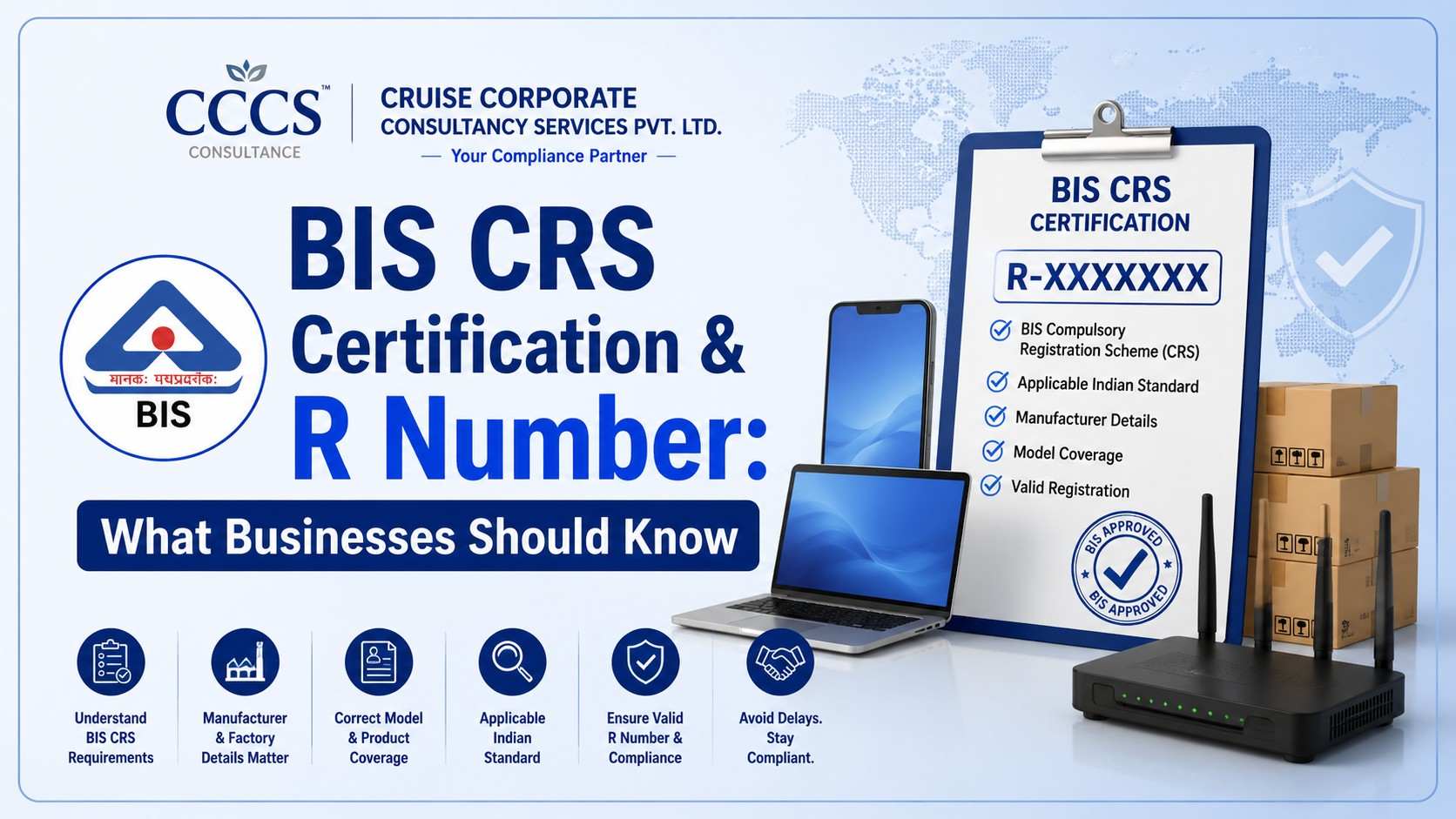
An R Number is the registration number associated with a product registered under the BIS Compulsory Registration Scheme.
It is commonly represented in a format such as:
R-XXXXXXXX
However, businesses should not look at the R Number as an independent approval that can simply be transferred from one product to another.
The registration is connected with important details including the manufacturer, manufacturing location, product category and applicable Indian Standard.
This distinction becomes particularly important when an importer purchases products from an overseas manufacturer.
A supplier saying, “We already have BIS,” is useful information—but it should not be the end of the compliance check.
The actual registration details need to correspond with the product that is intended for the Indian market.
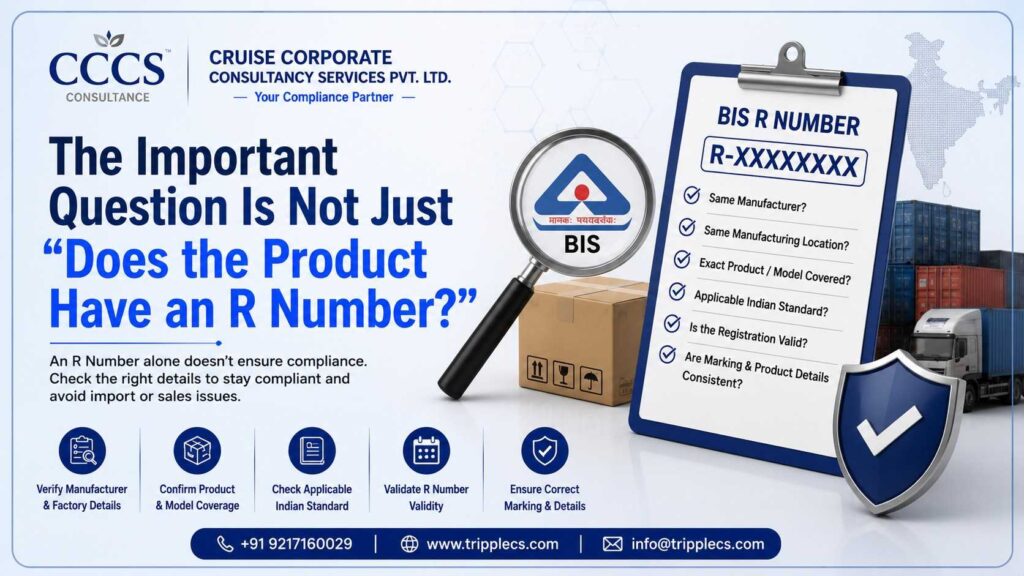
The Important Question Is Not Just “Does the Product Have an R Number?”
Imagine an Indian company planning to import a particular electronic product.
The overseas supplier provides an R Number and says that its products are already BIS registered.
At first, everything appears straightforward.
But several practical questions still remain:
- Is the registration associated with the same manufacturer?
- Does it cover the relevant manufacturing location?
- Is the exact product/model appropriately covered?
- Which Indian Standard applies to the product?
- Is the registration currently valid?
- Are the proposed marking and product details consistent with the registration?
This is why BIS Certification of CRS Item for R Number should be assessed against the actual product and supply arrangement rather than checking only whether an R Number exists.
One Product Category Can Contain Many Different Models
This is an area where businesses can easily underestimate the compliance requirement.
A company may sell multiple products under the same commercial category, but BIS compliance is not determined simply by how products are presented in a catalogue.
For example, a business may have:
Product → Series → Model → Variants
Commercially, these may appear to belong to one product family.
From a compliance perspective, however, businesses need to determine whether the relevant models and variants can be appropriately covered under the applicable registration framework.
This becomes particularly important when new models are introduced after the initial registration.
Instead of assuming that an existing R Number automatically covers every new model, the scope should be reviewed first.
Who Actually Gets the BIS CRS Registration?
This distinction is especially important for importers.
Under the CRS framework, registration is fundamentally associated with the manufacturer of the product, rather than simply the Indian company purchasing or distributing it.
For a foreign manufacturer, the Indian regulatory arrangement may also involve an Authorized Indian Representative (AIR) in accordance with applicable BIS requirements.
Therefore, an Indian importer should not automatically assume:
“I am importing the product, so the BIS R Number will simply be issued in my company’s name.”
The manufacturer, manufacturing premises, brand arrangement and Indian representation should be understood before determining the appropriate compliance route.
This is one reason overseas sourcing arrangements should be reviewed before commercial shipments begin.
An R Number Should Not Be Treated Like a Universal Product Licence
Suppose Manufacturer A has a BIS registration for a particular notified product.
Another factory manufactures a visually identical product.
Can the second factory simply use Manufacturer A’s R Number?
Businesses should not make that assumption.
A BIS registration is not merely attached to the appearance or commercial name of a product.
The manufacturing source is an important part of the compliance structure.
This becomes particularly relevant for businesses that:
- change OEMs,
- source the same product from multiple factories,
- move production to another facility,
- introduce additional models, or
- sell products under their own brand.
A sourcing change that looks minor commercially can therefore create a compliance question.
Private-Label Products Need Extra Attention
Consider a common business model.
An Indian brand selects an electronic product from an overseas OEM and asks the factory to manufacture it with the Indian company’s brand name.
The OEM says that the product already has BIS registration.
Does that automatically settle the matter?
Not necessarily.
The business should evaluate whether the proposed brand, model and manufacturing arrangement align with the applicable registration.
This is particularly important because commercial branding and regulatory registration are not always structured in exactly the same way.
For private-label businesses, checking this before placing a large purchase order can prevent problems later.
Testing Is More Than Getting a Laboratory Report
For products covered under BIS CRS, testing against the applicable Indian Standard forms an important part of the compliance framework.
However, businesses should avoid treating testing as an isolated task.
The product sent for testing should properly represent the product for which registration is being considered.
Changes in product design, critical components or model configuration can potentially affect the compliance position.
This is particularly relevant for companies whose suppliers frequently modify components based on availability.
A product may look identical externally while its internal configuration has changed.
That is why regulatory planning should remain connected with actual manufacturing and product specifications.
What Happens After an R Number Is Obtained?
Getting the registration is not necessarily the end of compliance responsibility.
Businesses should continue to consider whether:
the product being manufactured and marketed remains consistent with the registration under which it is being supplied.
This becomes especially relevant when:
- new models are launched,
- product specifications change,
- manufacturing arrangements change,
- branding changes,
- additional factories are used, or
- registration validity requires attention.
Therefore, BIS compliance should be viewed as part of product lifecycle management rather than only a pre-launch formality.
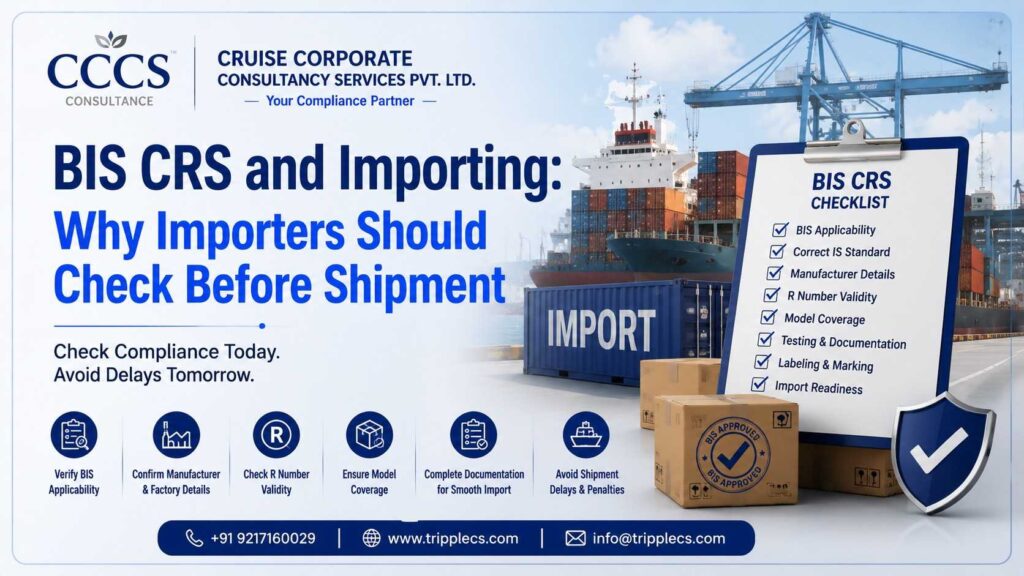
BIS CRS and Importing: Why Importers Should Check Before Shipment
Importers face an additional commercial risk.
By the time goods arrive in India, money may already have been committed to manufacturing, freight, insurance and other logistics.
Discovering a regulatory mismatch at that stage can be much more disruptive than identifying it before production or dispatch.
A better sequence is:
Identify Product → Check Applicability → Review Manufacturer & Models → Confirm Compliance Route → Plan Commercial Shipment
The purpose is not merely to complete certification earlier. It is to prevent regulatory decisions from being made after the commercial commitment has already been made.
Existing BIS Registration? Do Not Assume Everything Is Covered
An existing R Number can certainly be useful.
But the correct question is not simply:
“Does the supplier have BIS?”
A more useful question is:
“Does the existing BIS registration appropriately cover the product, manufacturer and commercial arrangement we intend to use?”
That small difference in questioning can prevent a significant compliance misunderstanding.
For businesses sourcing from overseas suppliers, it is particularly useful to review existing registration information before relying on it for an upcoming shipment.
When Should a Business Review BIS Certification?
Businesses should consider reviewing BIS Certification of CRS Item for R Number when planning to introduce a notified electronic or IT product into India, particularly when there is a new manufacturer, model, factory, brand arrangement or sourcing structure.
The review becomes even more important when a supplier claims that an existing BIS registration can be used.
Instead of starting with the application form, start with the product.
Once the product category, manufacturer, models, manufacturing premises and applicable regulatory requirement are understood, the appropriate certification route becomes much clearer.
Need Assistance with BIS Certification of CRS Items?
BIS CRS requirements can involve more than obtaining an R Number. Product classification, applicable standards, manufacturer details, model coverage, testing and existing registrations may all need to be reviewed before proceeding.
Cruise Corporate Consultancy Services Pvt. Ltd. (CCCS) can assist businesses in understanding their BIS certification requirements and preparing for the appropriate compliance process.
Whether you are a manufacturer, importer, brand owner or business sourcing products from an overseas OEM, our team can review your product situation before you proceed with the application.
Website: tripplecs.com
Phone: +91 9217160029